Category Humanities

1989 Tibetan Unrest

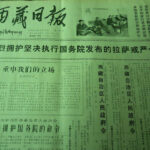
In 1989, as student-led pro-democracy protests spread across China, most notably in Beijing’s Tiananmen Square, there were sympathetic reactions in other parts of the country, including Lhasa, the capital of the Tibet Autonomous Region. However, the situation in Lhasa was…

Dzi Beads: A Mysterious Tibetan Treasure

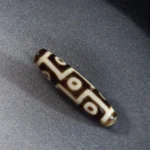
Dzi beads are highly valued spiritual artifacts originating from Tibetan and Himalayan cultures. These beads are believed to carry powerful protective and healing energies. Often made from agate, they are decorated with symbolic patterns such as circles (eyes), waves, squares,…

Kangyur

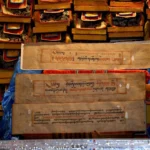
The Tibetan Buddhist canon is a defined collection of sacred texts recognized by various schools of Tibetan Buddhism, comprising the Kangyur and the Tengyur. The Kangyur or Kanjur is Buddha’s recorded teachings (or the ‘Translation of the Word’), and the Tengyur or Tanjur is the commentaries by great masters on Buddha’s teachings (or the…

Traditional Tibetan Single-Log Ladders

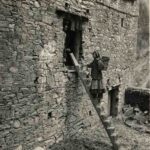
In the highlands of Tibet, one can still find a remarkable example of indigenous craftsmanship: the single-log ladder, a traditional tool carved entirely from a single tree trunk. This type of ladder is unique to Tibetan culture and has been…

Han Chinese Born in Tibetan 

Han Chinese born in Tibetan areas may develop sympathy for Tibetans and their culture, as well as hostility toward government policies perceived as suppressing Tibetan culture. This phenomenon can be analyzed through social, cultural, psychological, and historical perspectives.  Han Chinese…

Jiméjiānzàn Welfare School

Jiméjiānzàn Welfare School is located at the border of Guoluo Tibetan Autonomous Prefecture and Hainan Tibetan Autonomous Prefecture in Qinghai Province, adjacent to the famous Laga Monastery and nestled at the foot of the magnificent Ani Quanggong Mountain. Facing the…

Pagsum Lake

Dragsum Tsho (Tibetan: བྲག་གསུམ་མཚོ་, Wylie: brag gsum mtsho, THL: Draksum Tso, Pagsum Co (simplified Chinese: 八松错, 巴松措; traditional Chinese: 八松錯; pinyin: Bāsōng Cuò), literally meaning “three rocks” in Tibetan, is a lake covering 28 square kilometres in Gongbo’gyamda County, Nyingchi of the Tibet Autonomous Region, China, approximately 300 km (190 mi) east of Lhasa. At 3,700 metres over sea level it is about 18 km…

Tashi Lhunpo Monastery

Tashi Lhunpo Monastery (Tibetan: བཀྲ་ཤིས་ལྷུན་པོ་) is an historically and culturally important monastery in Shigatse, the second-largest city in Tibet. Founded in 1447 by the 1st Dalai Lama, it is the traditional monastic seat of the Panchen Lama. The monastery was sacked in 1791, when the Gorkha Kingdom invaded Tibet and captured…