
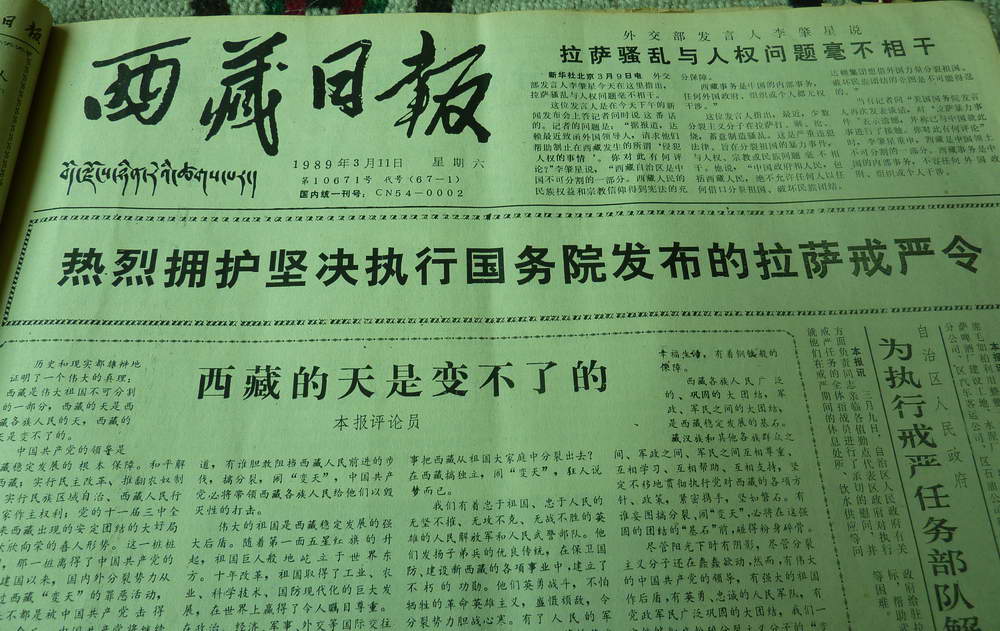
In 1989, as student-led pro-democracy protests spread across China, most notably in Beijing’s Tiananmen Square, there were sympathetic reactions in other parts of the country, including Lhasa, the capital of the Tibet Autonomous Region. However, the situation in Lhasa was unique due to earlier unrest and a heavy military presence.
The 1987–1989 Tibetan unrest was a series of protests and demonstrations that called for Tibetan independence. These protests took place between September 1987 and March 1989 in the Tibet Autonomous Region, in the Tibetan regions of Sichuan, and Qinghai, as well as the Tibetan prefectures in Yunnan and Gansu. Protests began shortly after the Dalai Lama, the religious and temporal leader of Tibet exiled in India since the 1959 Tibetan unrest, proposed a Five Point Peace Plan regarding the “status of Tibet” on September 21, 1987, which was subsequently rejected by the Chinese government. The plan advocated for greater respect and autonomy of the Tibetan people, and claimed that “Tibet was a fully independent state when the People’s Liberation Army invaded the country in 1949–50.” China rejected the idea of Tibetans as an invaded people, stating that “Tibet is an inalienable part of Chinese territory” and has been for hundreds of years.The Tibetan sovereignty debate is longstanding, and the Tibetan assertion that they are a separate and unique people invaded by China has become a central argument for their independence.
On September 27, 1987, the first demonstration began. Twenty-one monks from Lhasa’s Drepung Monastery and an undetermined number of laypeople took to the streets to show their support for the Dalai Lama, waving the Tibetan flag and calling for Tibetan independence; the Chinese authorities arrested all twenty-one monks as well as five laypeople.On October 1, China’s National Day, monks from Lhasa’s Sera Monastery decided to protest once again, calling for Tibetan independence, but this protest turned violent. Protesters threw rocks at the police, overturned motor vehicles and set them on fire, the police station was set ablaze, and at least six Tibetans died.Chinese media classified those involved as rioters, agitators, and members of a “clique of supporters of the Dalai Lama.” In the following weeks, the Chinese authorities arrested hundreds of Tibetans suspected of being at the demonstrations, told foreign travellers and journalists to leave, and established a curfew. Over the next three years, demonstrations of various sizes continued to occur.
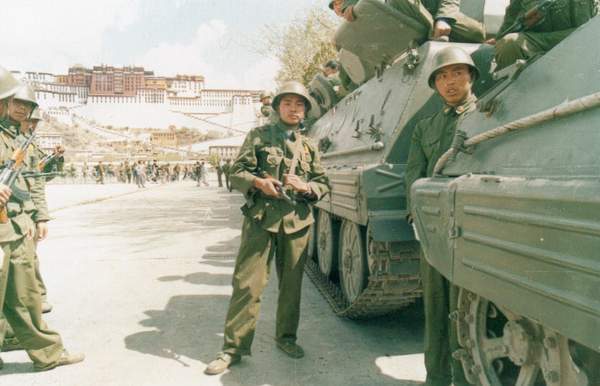
The largest demonstrations took place between March 5–7, 1989 in the Tibetan capital of Lhasa. It began as a small protest on March 5, with a handful of nuns, monks, and Tibetan youth in the Barkhor flying the Tibetan flag and calling for Tibetan independence, but they were quickly joined by a crowd of several hundred people. As time went on, tensions escalated between protesters and the police, and violence eventually erupted. According to Tibet Watch, violence erupted when a policeman threw a bottle at the crowd, but Chinese media reported that the violence began with protesters throwing rocks at the police station. Either way, the violence between Tibetan protesters and Chinese security forces continued for three days, with PAP soldiers shooting at unarmed civilian protesters in order to restore order.Protests ended with the declaration of martial law on March 8. The few foreign journalists and tourists remaining were expelled from Tibet on March 10 and an estimated 60,000 Chinese troops and police arrived in Lhasa to restore order. Accounts of underreported deaths and excessive military threat against protesters have surfaced, but verifiable details remain elusive. The exact number of deaths during this three-day period is unknown, with Chinese news outlets recording a total of 10 deaths and 60 injured while other, non-Chinese or pro-Tibet, media estimate between 16 and 50 people died. Another report estimates as many as 450 deaths and hundreds more injured in the first few months of 1989 in Tibet. Martial law effectively quelled the demonstrations, with Chinese police arresting thousands of Tibetans suspected of participating in the demonstrations and reportedly silencing any media trying to report on the unrest.Lhasa would remain under martial law for thirteen months, but no more large protests would occur
January 19 of 1989 – sentences were pronounced in consequence of the arrests made during the riots of 1988 with deterrent harshness. The sentences ranged from three years imprisonment to the death penalty (with delay of March 7 – all foreigners including journalists were evacuated. This signified an end to the provision of information to the rest of the world on the riots. Five people died in two days according to official sources. However, Tang Daxian, a former Chinese journalist present in Lhasa during that period, claims 387 civilians plus 82 religious people have been killed, and 721 people have been injured, according to a report he saw from Public Security Bureau.
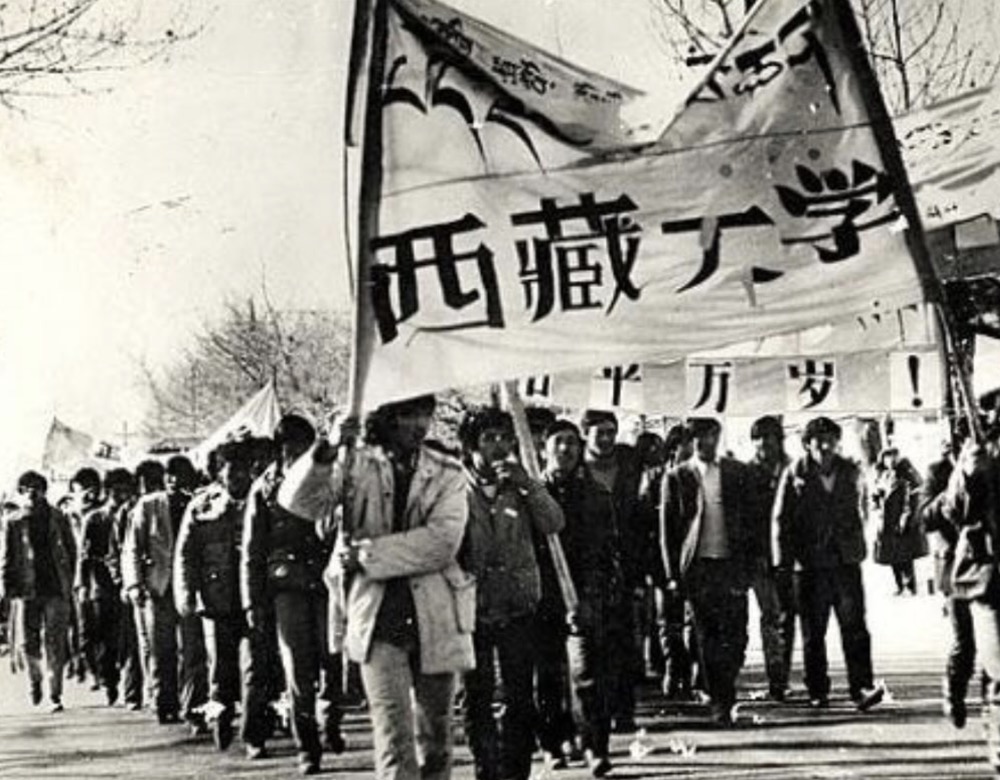
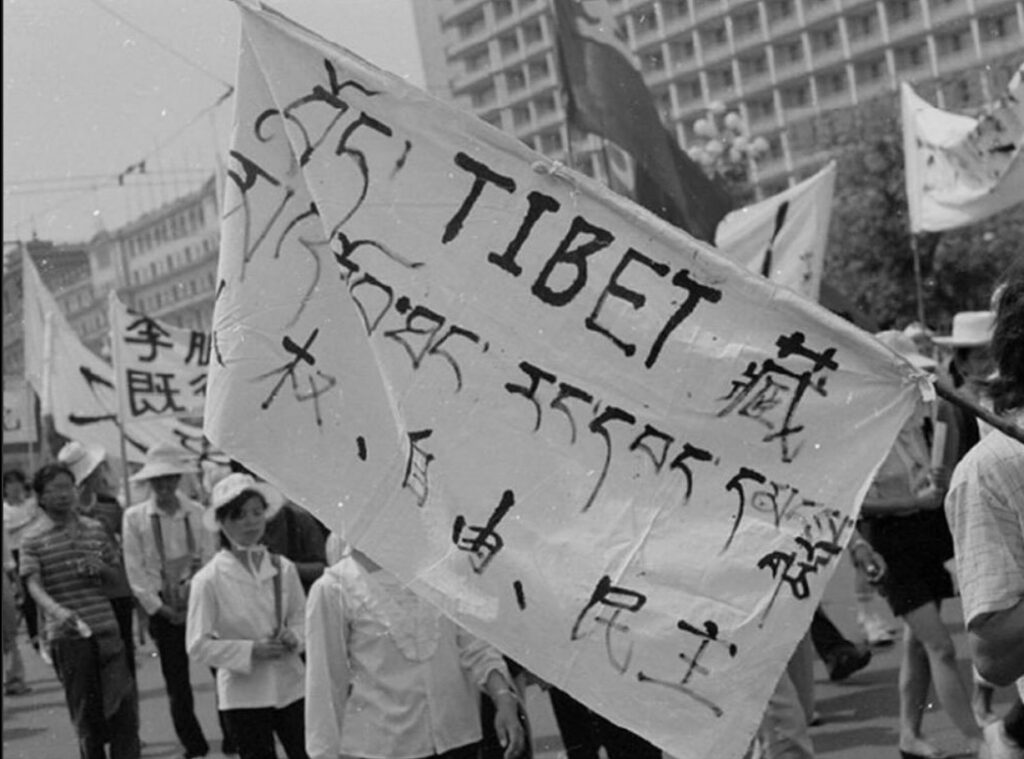
Some students from Tibet participated in the 1989 Tiananmen Square pro-democracy movement in Beijing. While the majority of protesters were Han Chinese, there were also students from various ethnic minorities, including Tibetans, who were studying at universities in Beijing.
These Tibetan students joined their peers in peaceful demonstrations, advocating for political reform, freedom of speech, and an end to corruption. Their participation was driven by a shared desire for greater freedoms and democratic governance, rather than specific ethnic or regional concerns.
However, due to the Chinese government’s strict control over information and the sensitive nature of ethnic minority involvement in political movements, detailed records of individual Tibetan students’ participation are scarce. Nonetheless, their involvement is acknowledged in various accounts of the protests, highlighting the diverse makeup of the demonstrators.
Following the crackdown on June 4, 1989, many participants faced severe consequences, including arrest, imprisonment, and expulsion from their universities. Tibetan students, like their Han counterparts, were subjected to these reprisals, and some may have faced additional scrutiny due to their ethnic background.
In summary, while Tibetan students were not a large contingent of the Tiananmen Square protests, their presence underscored the widespread appeal of the pro-democracy movement across different ethnic and regional groups in China.
Today marks the anniversary of the June 4th student movement. Whether in Beijing or Lhasa, then or now, the yearning for freedom among university students remains universal. Every student who took part in the movement exemplified the essence of humanity—each one a testament to the courage and hope of youth.
Let us conclude by honoring the unnamed and unknown “Tank Man,” whose solitary act of defiance became an enduring symbol of resistance. Though his identity and fate remain a mystery, his bravery lives on in our collective memory, haunting oppressive regimes that seek to erase such truths.
LONG LIVE YOUTH!
LONG LIVE FREEDOM!
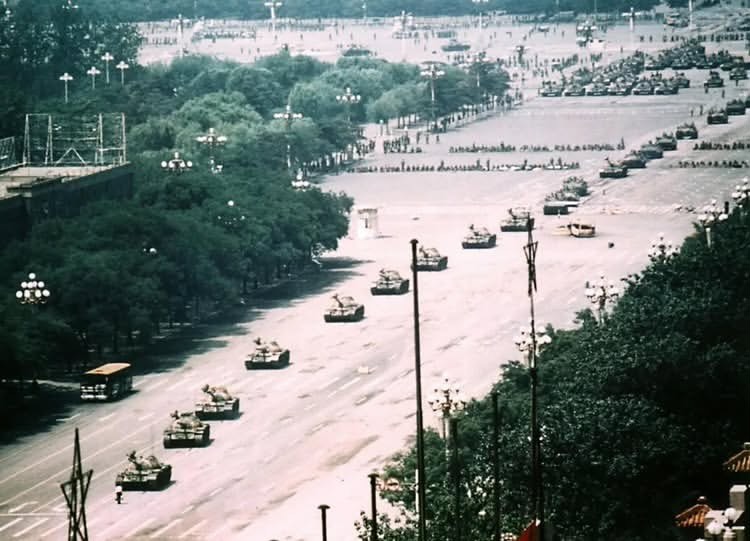
The introduction text and photo comes from Web
Parts of Photo by Clint & Wilson