
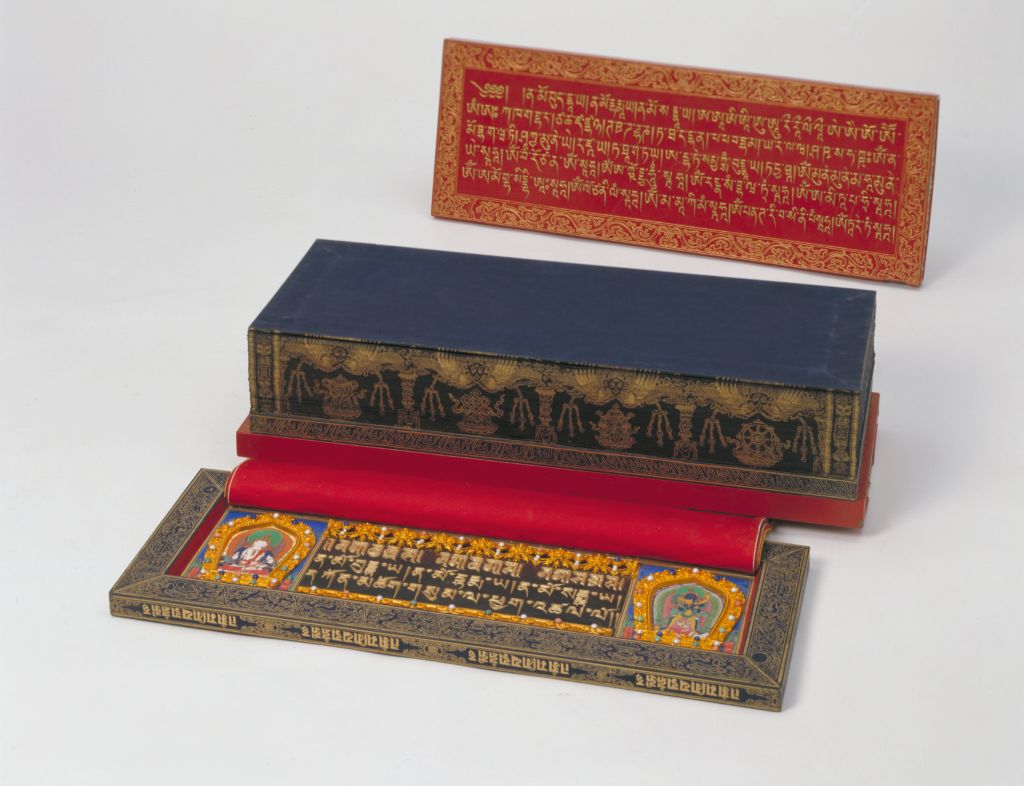
The Tibetan Buddhist canon is a defined collection of sacred texts recognized by various schools of Tibetan Buddhism, comprising the Kangyur and the Tengyur. The Kangyur or Kanjur is Buddha’s recorded teachings (or the ‘Translation of the Word’), and the Tengyur or Tanjur is the commentaries by great masters on Buddha’s teachings (or the ‘Translation of Treatises’).
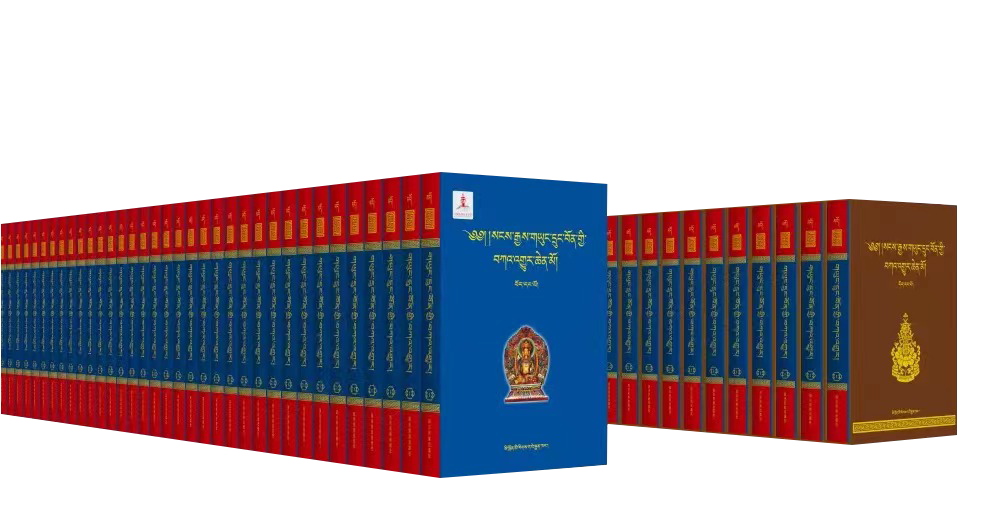
In addition to earlier foundational Buddhist texts from early Buddhist schools, mostly the Sarvastivada and Mahayana texts, the Tibetan canon includes Tantric texts. The last category is not always sharply distinguished from the others: the Tantra division sometimes includes material usually not thought of as Tantric in other traditions, such as the Heart Sutra and even versions of material found in the Pali Canon.
The Tibetans did not have a formally arranged Mahayana canon, and so devised their own scheme with two broad categories: the “Words of the Buddha” and later the commentaries; the Kangyur and Tengyur respectively. The Tengyur underwent a final compilation in the 14th century by Bu-ston (1290–1364). There is no proof that Bu-ston also took part in the collection and edition of the Tsal pa Kangyur, although he consecrated a copy of this Kangyur 1351 when he visited Tshal Gung-thang
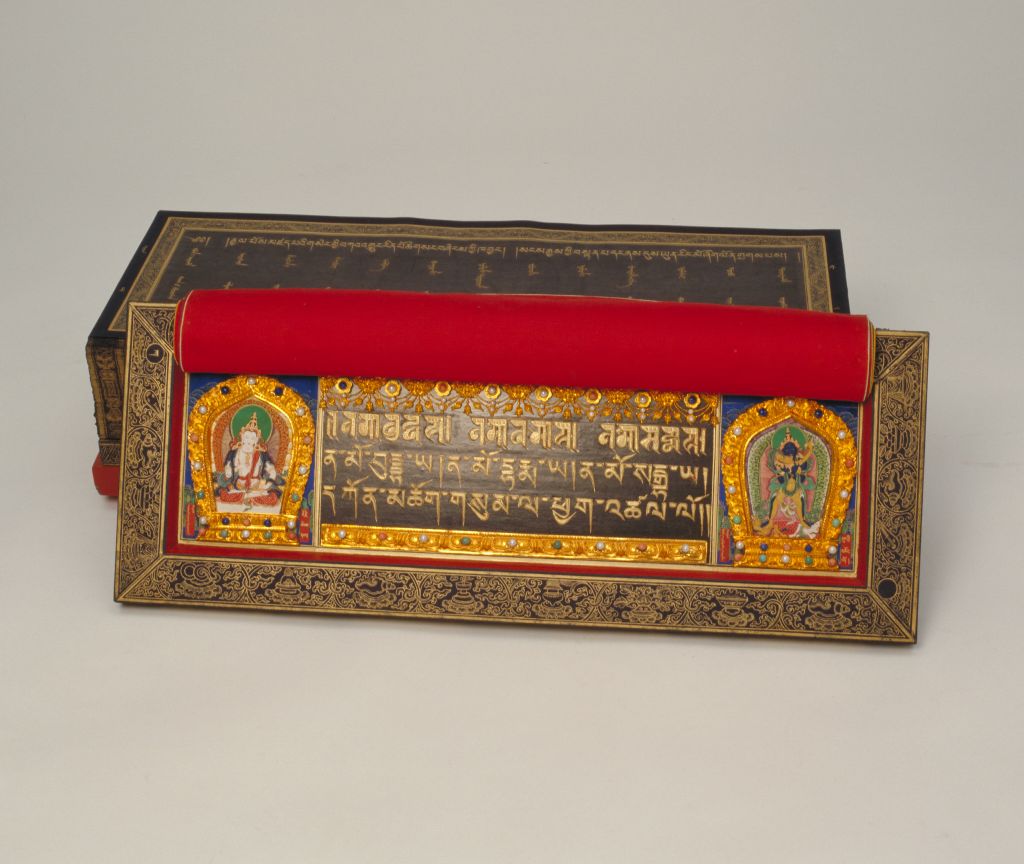
The Tibetan Bön religion also has its canon literature divided into two sections called the Kangyur and Tengyur, said to have been translated from foreign languages, but the number and contents of the collection are not yet fully known.[by whom?][clarification needed] Apparently, Bön began to take on a literary form about the time Buddhism entered Tibet. The Bön Kangyur contains the revelations of Tonpa Shenrab (Wylie: gShen rab), the traditional founder of Bön. A version was published in 1993-1997.[9] The Bon traditions of the Tibetan part of the Chinese tripitaka Zhonghua da zang jing (中華大藏經) has also been published in 2022.
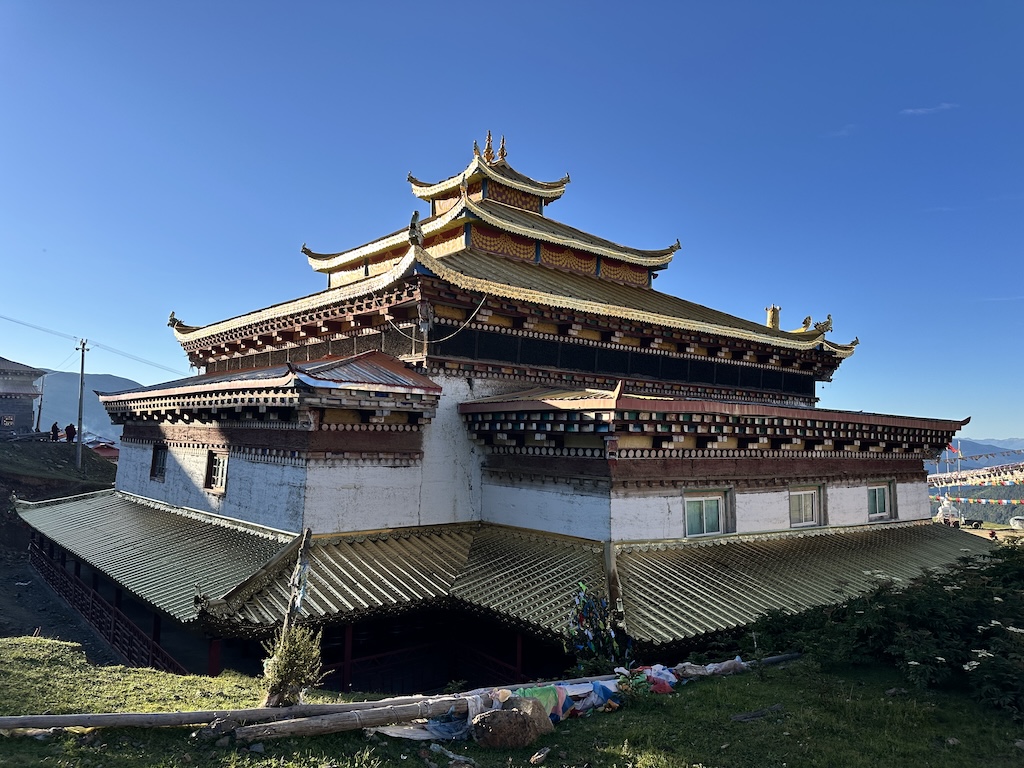
The temple’s offerings and chanting ceremonies are consistent with those of other Bon monasteries. The main sacred object in the temple is the collected translation of the Infinite Sutras transmitted by the Holy Patriarch Tonpa Shenrab Miwoche, known as the Bon Kangyur, an ancient scripture of the Bon religion. Before the Cultural Revolution, most major areas of the Tibetan region held many copies of the Kangyur, but after the Cultural Revolution, nearly all complete versions were lost. The version preserved in this temple is currently the only complete edition of the Bon Kangyur, and it is considered a rare treasure in the world.
After the Central Government implemented its policy of supporting religious freedom, in 1990, Genjula Ser Rinpoche organized and published the original Bon Kangyur preserved in this temple. Since the Cultural Revolution, all published versions of the Bon Kangyur have been based on this original edition. It is said that this version was copied by hand in the 19th century by monks from Qiongyu over a long period of time, funded by the patron Jiachang.

When the couple, Lama Liangdeng Sangwo Rinpoche and his wife, arrived in Qiongyu, the main patron of the Bon religion at the time—Qiongyu minister Gagya Sorang Danda—presented them with a complete set of the Kangyur. Gagya Danzeng Cuoping escorted the couple and the scriptures to Xinlong County. After returning to Xinlong, Sangwo Rinpoche stored the Kangyur in Waqie Monastery.
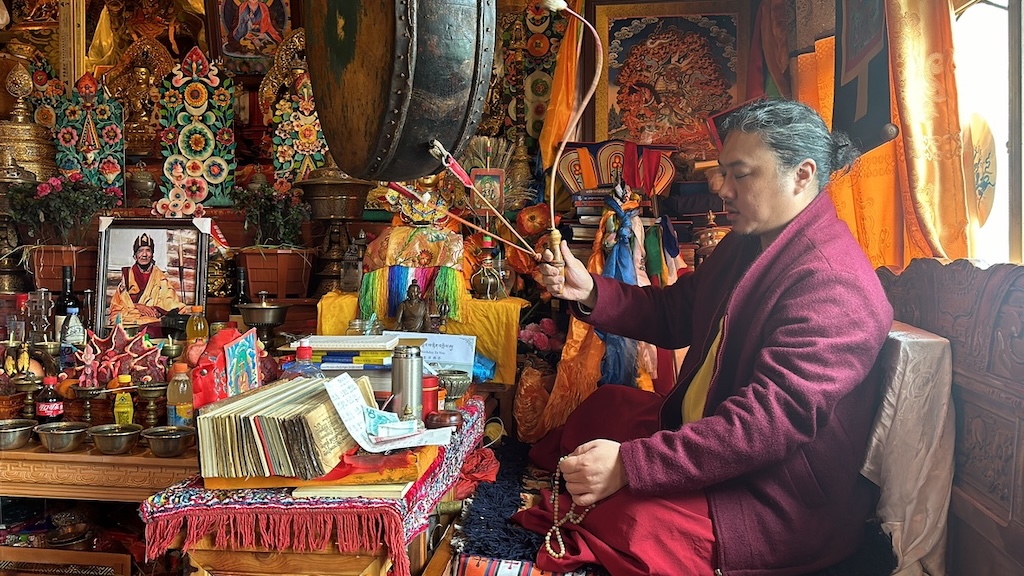
During the Cultural Revolution, from 1961 to 1984 (a total of 24 years), the scriptures were secretly preserved in a place called Western Walong within Waqie Monastery. This effort was overseen by Khangzhu Kaqiong Wangmu and Lama Zhachia Yongzhong Dongzhu, who also held government positions at the time. Monastic leaders including Xiri Wangdan, Gensang Dorje, Sorang Yixi, Yongzhong Jianzan, Sorang Baidan, Ado, and Lojia risked their lives, guarding the scriptures day and night to protect them.

The current reincarnated lama of Waqie Monastery, Gönzhug Qingme Lingpa, is regarded as the spiritual heir to the Bon tradition upheld at this historic temple. Revered for his deep spiritual insight and dedication to the preservation of Bon teachings, he has played a crucial role in continuing the legacy of sacred scripture conservation, ritual practice, and community guidance. His presence symbolizes the unbroken transmission of lineage and the enduring vitality of Bon culture in the region.

Before the Cultural Revolution, various versions of the Bon Kangyur were preserved in many parts of Tibet. However, after the Cultural Revolution, only one version emerged as the most complete and comprehensive edition of the Bon Kangyur. Since the implementation of the policy of religious freedom, Khenpo Tashi Lashi (Khe Tarlashi) has published the Bon Kangyur based on this version. The Bon Kangyur published in 1990 was also derived from this foundational text.
Historically, this edition of the Bon Kangyur was produced with the support of the Gagya family in the 15th century. The calligraphy work was undertaken by scribes in Chongjer, and Minister Suonum Dantar of Chongjer presented the completed scriptures to Lama Nyingter of Waqie Monastery. During a visit to Chongjer, Lama Sangnag Lingpa escorted a complete volume of the scriptures to Nyingrong, and later, the lama offered it to the monastery as a sacred treasure.
During the Cultural Revolution, the scriptures were hidden in the western section of the monastery at a site called Barong, where they were safeguarded from 1961 to 1984 — a span of 24 years. Under the guidance of Kador Wangmu and Lama Yongzhong Dondrub, who was also a local government official at the time, a group of dedicated monks took turns guarding the scriptures day and night over the years. These devoted guardians included Sherab Bangdan, Kunsang Dorje, Suonum Yeshe, Yungdrung Gyatsan, Suonum Badan, Ado, and Logyum.
In short, thanks to their selfless sacrifice and tireless efforts, the Bon Kangyur was miraculously preserved in its entirety. This achievement stands not only as a profound gift to Tibetan culture, but also as a remarkable contribution to the cultural heritage of the world.
The introduction text and photo comes from Web
Parts of Photo by Clint & Wilson