nowind

nowind

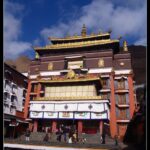
Tashi Lhunpo Monastery

Tashi Lhunpo Monastery (Tibetan: བཀྲ་ཤིས་ལྷུན་པོ་) is an historically and culturally important monastery in Shigatse, the second-largest city in Tibet. Founded in 1447 by the 1st Dalai Lama, it is the traditional monastic seat of the Panchen Lama. The monastery was sacked in 1791, when the Gorkha Kingdom invaded Tibet and captured…

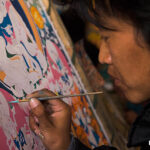
Painting Thangka

A thangka (Nepali pronunciation: [ˈt̪ʰaŋka]; Tibetan: ཐང་ཀ་; Nepal Bhasa: पौभा) is a Tibetan Buddhist painting on cotton, silk appliqué, usually depicting a Buddhist deity, scene, or mandala. Thangkas are traditionally kept unframed and rolled up when not on display, mounted on a textile backing somewhat in the style of Chinese scroll paintings, with…

Kowtowing with the full body

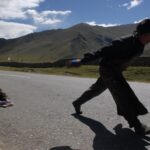
Kowtowing with the full body (Tibetan: ཕྱག་འཚལ, meaning “prostration”) is a form of advancement in the pilgrimage of Tibetan Buddhism.“Kowtowing with the full body” is divided into three types: long-distance (traveling thousands of miles over months or years, enduring wind…

Young Lamas

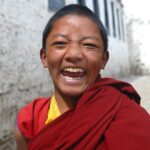
In Tibetan Buddhist monasteries, many young lamas (child monks) receive religious education instead of attending secular schools. However, this does not mean they receive no education. Tibetan Buddhism provides a structured learning system that focuses on religious studies while also incorporating cultural…

Zhangmu Port

Zhangmu Port (འགྲམ་འགག་སྒོ།) is a crucial border crossing between China and Nepal, located in Zhangmu Town, Nyalam County, Shigatse City, Tibet Autonomous Region, China. Situated on the southern slopes of the Himalayas at an altitude of approximately 2,300 meters (7,546 feet), Zhangmu enjoys…

Tradruk Temple

Tradruk Temple (Tibetan: ཁྲ་འབྲུག་དགོན་པ།, Wylie: khra-’brug dgon-pa, Lhasa dialect: [ʈʂʰaŋʈʂuk kø̃pa], referred to as Changzhu Monastery in Chinese) in the Yarlung Valley is the earliest great geomantic temple after the Jokhang and some sources say it predates that temple. Tradruk Temple is located in Nêdong County of Lhoka in the Tibet Autonomous Region, about seven kilometres south of the county…

Butter Sculptures

The renowned butter sculptures (also known as butter flowers), which originated in Tibet but flourished uniquely at Kumbum Monastery (Ta’er Monastery) in Qinghai, represent a distinctive sculptural art form of the Tibetan people.Crafted from pure, delicate butter mixed with various mineral pigments, these…

Barkhor

Barkhor (Wylie: bar-skor, ZYPY: བར་སྐོར་), is the commercial center and busiest street of the old city of Lhasa, Tibet. The Barkhor Ring Road is composed of Barkhor East Street, Barkhor South Street, Barkhor West Street and Barkhor North Street. The circumference of Barkhor Street is…

Namtso

Namtso or Lake Nam (officially: Namco; Mongolian: Tenger nuur; Chinese: 纳木错; pinyin: Nàmù Cuò; Tibetan: གནམ་མཚོ་, ZYPY: Nam Co; “Heavenly Lake” in European literature: Tengri Nor, 30°42′N 90°33′E) is a mountain lake on the border between Damxung County of Lhasa prefecture-level city and Baingoin County of Nagqu Prefecture in the Tibet Autonomous Region of China, approximately 112 kilometres (70 mi) NNW of Lhasa. Namtso (Namco) is a lake that first…

Ani Tsankhung Nunnery

Ani Tsankhung Nunnery (Tibetan: ཨ་ནི་མཚམས་ཁུང, Wylie: A ni mtshams khung Chinese: 阿尼仓空寺; pinyin: Ā ní cāng kōng sì) is a nunnery of the Gelug school of Tibetan Buddhism in the city of Lhasa, Tibet Autonomous Region, China. It was built in the 15th century on a site that had been used for meditation…