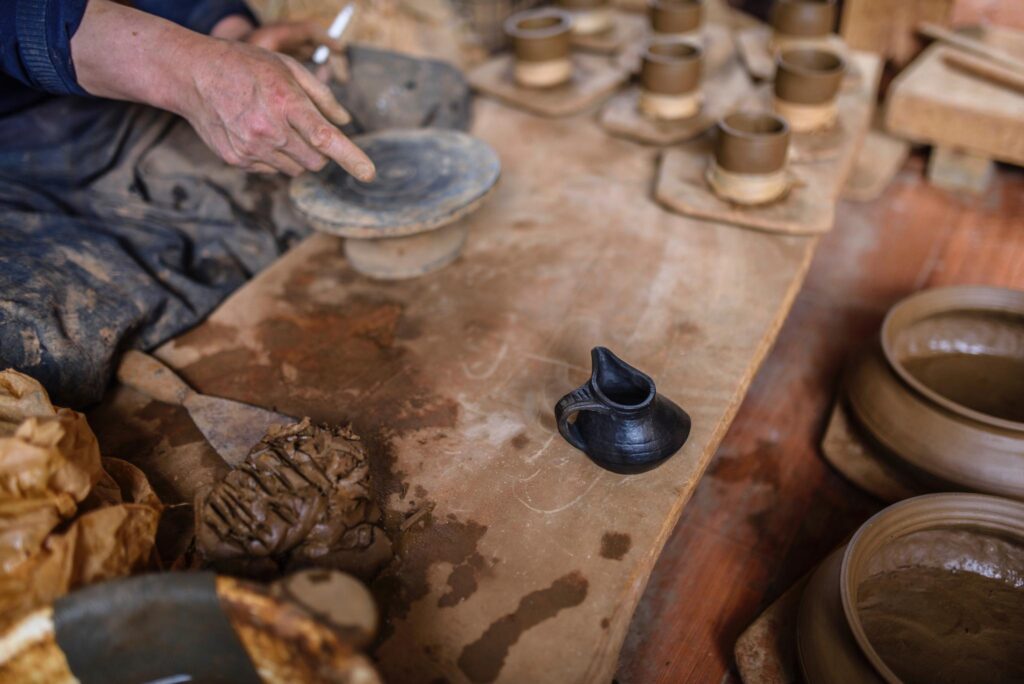
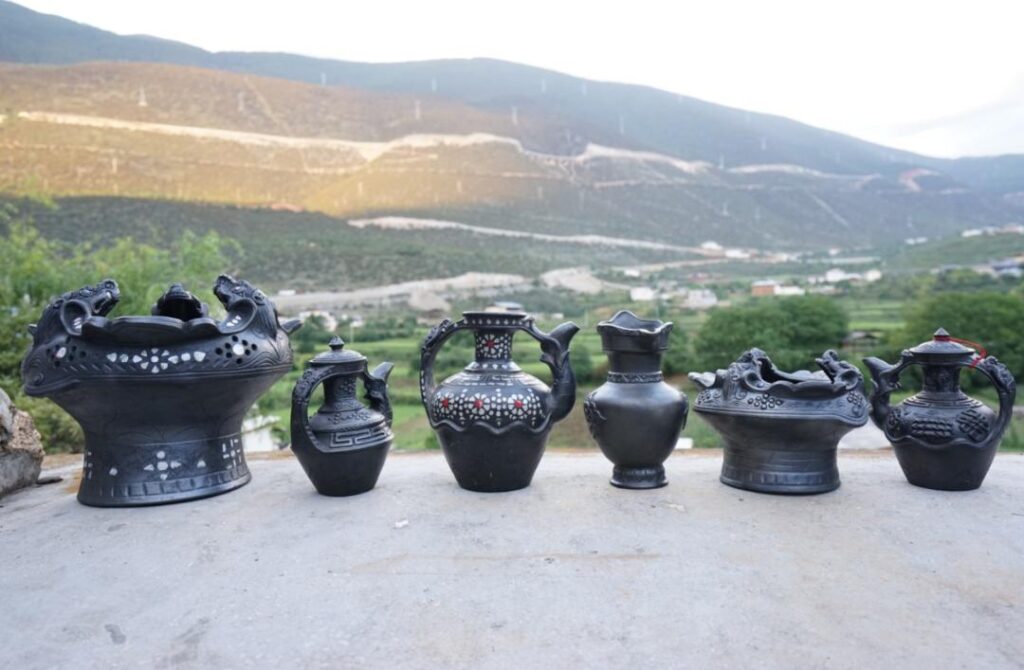
Tibetan Black Pottery is one of the most ancient and distinctive traditional crafts of Tibet, reflecting the region’s rich cultural heritage and craftsmanship. This unique form of pottery, known for its deep black color and intricate hand-carved designs, has been passed down for centuries, primarily crafted in regions like Lhatse and Shigatse.
Origins and Craftsmanship Tibetan Black Pottery dates back over a thousand years and is made using a time-honored process that remains largely unchanged. Unlike glazed ceramics, this pottery is crafted from locally sourced clay mixed with animal dung and other natural materials. The pots are shaped by hand, adorned with traditional motifs, and then fired in an open kiln. The characteristic black color is achieved through a smoke-firing technique, where the pots are covered with sawdust or straw, allowing carbon to penetrate the clay surface.
Cultural Significance These pottery items are deeply embedded in Tibetan daily life and spiritual practices. They are commonly used for storing butter tea, barley wine, and tsampa (roasted barley flour), and some pieces serve as ritual vessels in monasteries. The intricate designs often incorporate Buddhist symbols, reflecting the region’s religious beliefs and artistic traditions.
Challenges and Preservation Despite its cultural importance, Tibetan Black Pottery faces challenges due to modernization and industrial production. Many traditional artisans struggle to compete with mass-produced goods, and younger generations are less inclined to take up the craft. However, efforts are being made to preserve and promote this heritage through cultural programs and artisan training initiatives.
Text By Clint & Wilson The photoes come from Baidu