

The recent enactment of the Law on Promoting Ethnic Unity and Progress (March 2026) marks a seismic shift in China’s ethnic policy from a framework of “autonomy within diversity” to one of “unity through homogenization.” While the law’s title suggests a pursuit of harmony, from our perspective, its legal mechanics signal an existential threat to the cultural and linguistic survival of the Tibetan people. Next, I will provide a detailed explanation of the relevant policies and their implications.
The Linguistic Erasure: From Mother Tongue to Second Language
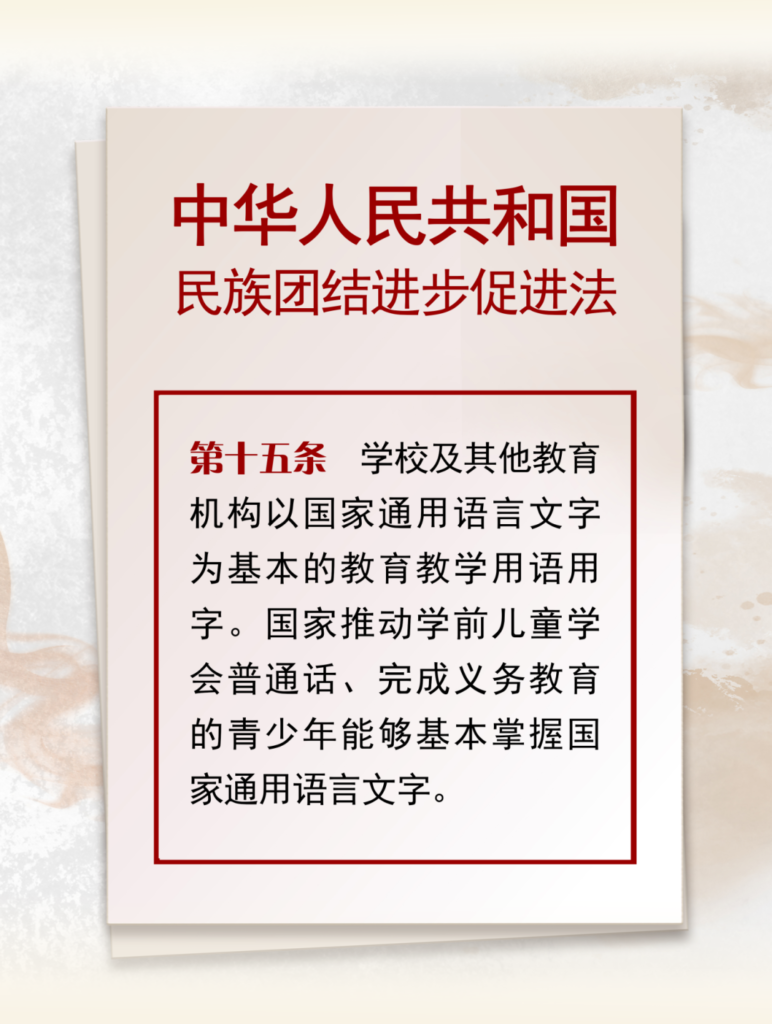
The most immediate and devastating impact lies in the domain of education. The new law institutionalizes Mandarin-medium instruction from preschool through high school, effectively relegating the Tibetan language to a “second language” or a mere elective. Language is the vessel of Tibetan Buddhism, philosophy, and history. When a generation is raised without fluency in their native script, they lose access to their ancestors’ wisdom and the ability to practice their faith authentically. Now, we are witnessing the creation of a “cultural vacuum.” We believe that within two generations, the profound literary and oral traditions of the Tibetan Plateau risk becoming museum artifacts rather than living, breathing cultures.
“Forging the Common Consciousness”: The End of Autonomy
The law centers on the concept of “Forging the Common Consciousness of the Chinese Nation.” While national identity is standard in many countries, this law uses it as a tool to dismantle the “Regional Ethnic Autonomy” promised by the PRC Constitution.
By promoting “interethnic integration” in housing, employment, and social structures, the law actively dissolves the geographic and communal clusters that have protected Tibetan traditions for centuries. Meanwhile, under this framework, any expression of distinct cultural pride or a desire for linguistic preservation can be reclassified as “undermining unity” or “inciting separatism,” turning cultural preservation into a national security issue.
The Paradox of Forced Unity
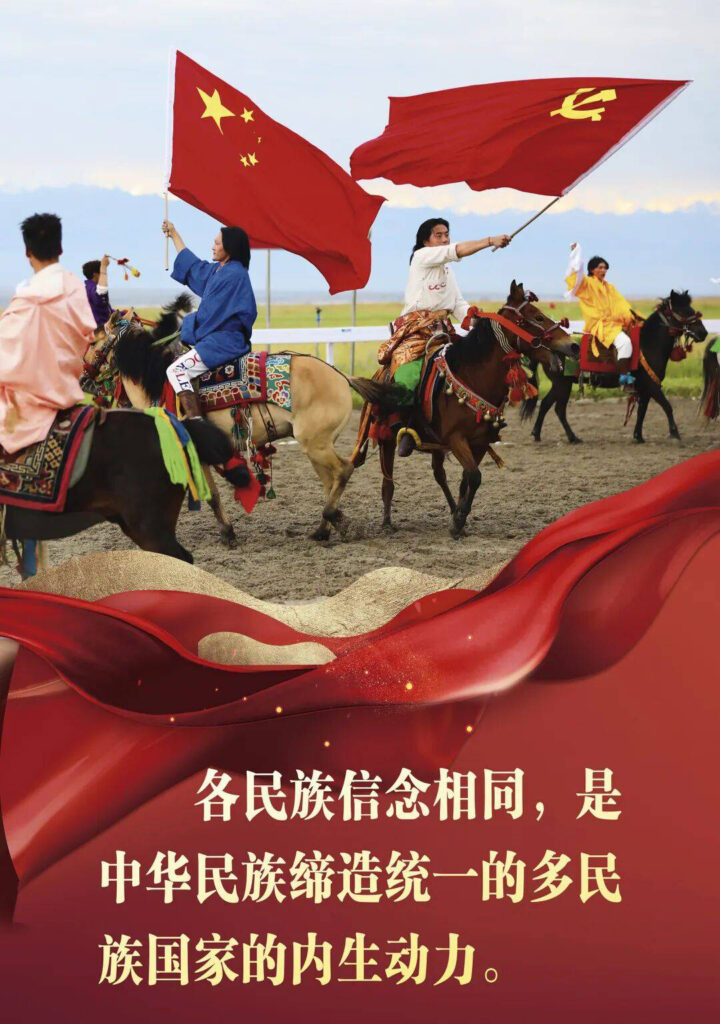
True unity is built on mutual respect and the voluntary embrace of shared values. By mandating “sameness” through legal coercion, the state risks fostering resentment rather than harmony. History has shown that when a people’s core identity is suppressed, the long-term result is often deeper social fracture, not stability.
As members of the global Chinese diaspora, we occupy a unique position. We understand the nuances of Chinese history, yet we live in societies where freedom of expression allows us to speak for those who cannot. We must distinguish between “loving one’s heritage” and “supporting cultural homogenization.” Use our platforms to facilitate dialogue between Han and Tibetan individuals. Breaking down the “us vs. them” narrative starts with humanizing the “other.”
The “Ethnic Unity” law may achieve a superficial uniformity, but it does so at the cost of China’s greatest treasure: its pluralistic soul. As overseas Chinese, our duty is not to be silent witnesses to this erasure, but to be the guardians of a vision of China that is inclusive, diverse, and truly at peace with its own history.
The photos come from Baidu
Edited by Wilson & Clint