
(Debate in Tibetan Buddhism)
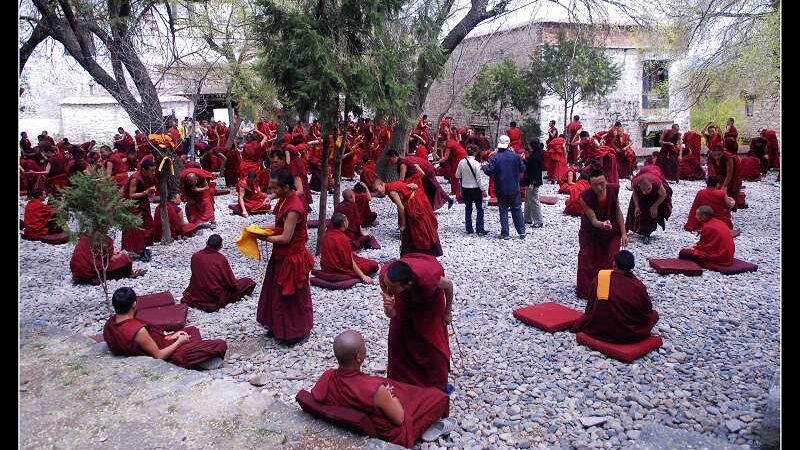
The practice of debate (known in Tibetan as རྩོད་པ་, pronounced tsöpa) is a central and distinctive feature of Tibetan Buddhism, serving as both a method of study and a form of spiritual exercise. It is a rigorous intellectual and philosophical activity aimed at deepening monks’ understanding of Buddhist doctrines, enhancing their reasoning abilities, and refining their logical skills.
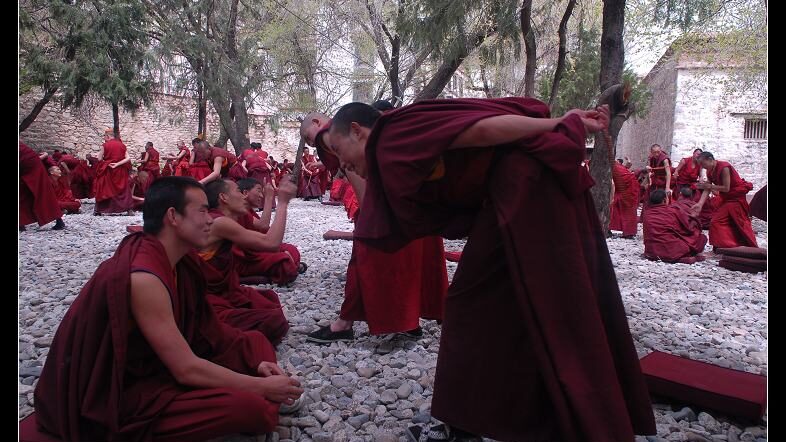
Debate serves to challenge and verify monks’ understanding of Buddhist philosophy and scriptures, helping them identify and rectify misconceptions while fostering clear and precise comprehension.
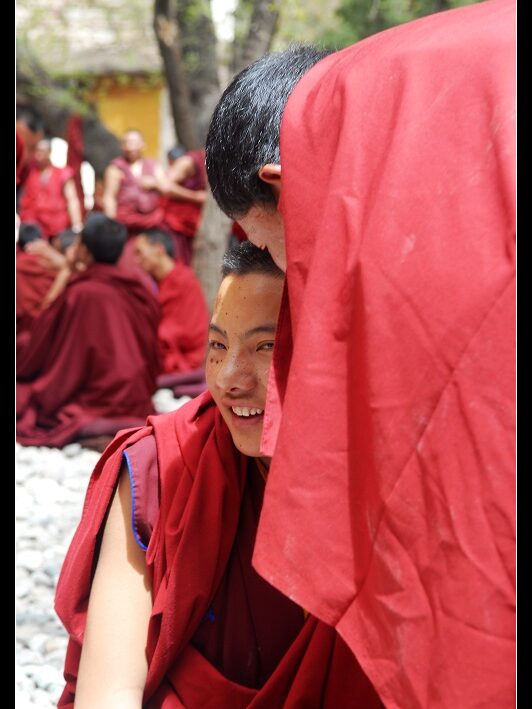
The debate typically involves two roles: the questioner (challenger) and the defender (respondent). The questioner poses intricate queries and arguments, compelling the defender to provide accurate responses grounded in Buddhist teachings.

Debates are held in designated debate courtyards within monasteries, such as those in Drepung, Sera, and Ganden Monasteries. They are conducted daily as part of the monks’ curriculum, often in the late afternoon or early evening.
Debates encompass a wide range of subjects in Buddhist philosophy, such as:
• Dependent Origination: The nature of causality.
• The Three Trainings: Ethics, concentration, and wisdom.
• Emptiness and Selflessness: Core principles of Madhyamaka philosophy.
• Consciousness and Perception: Topics from Yogacara or Mind-Only schools.
• Karma and Rebirth: The mechanism of actions and their consequences.

Debate in Tibetan Buddhism is a profound synthesis of intellect, spirituality, and tradition. Its dynamic, interactive approach not only deepens monks’ understanding of the Buddha’s teachings but also ensures the continuity and vitality of Tibetan Buddhist philosophy. This practice stands as a testament to the intellectual richness and adaptability of Buddhism in both traditional and modern contexts.
The introduction text comes from Wiki
Photo By Clint & Wilson