

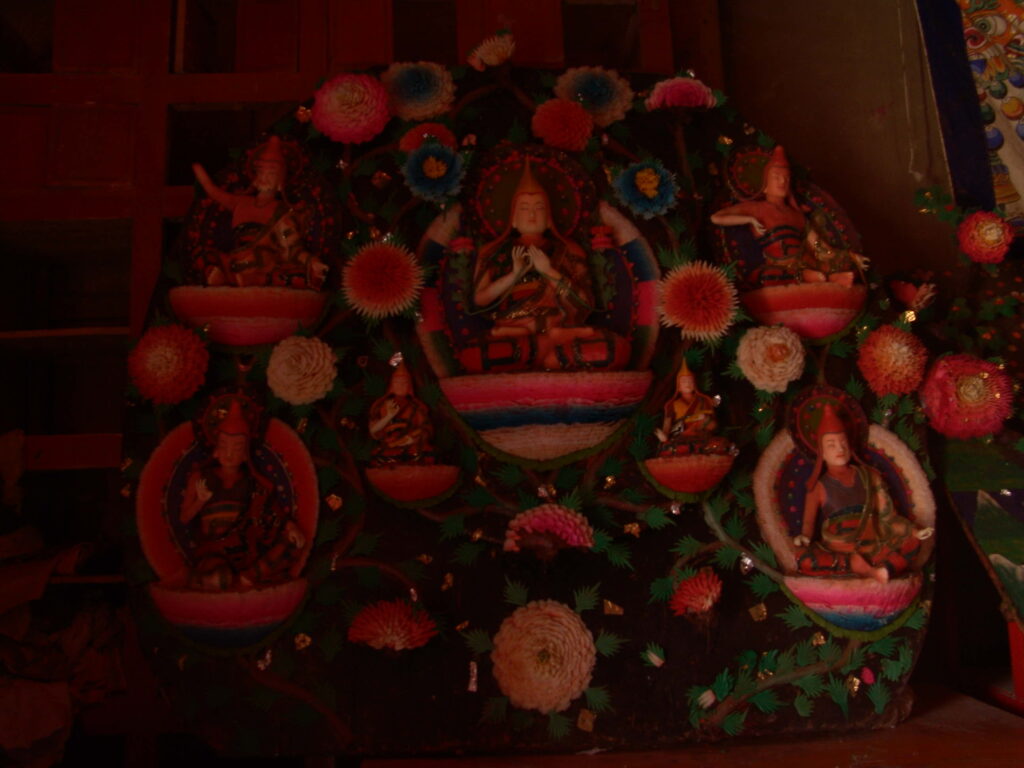
The renowned butter sculptures (also known as butter flowers), which originated in Tibet but flourished uniquely at Kumbum Monastery (Ta’er Monastery) in Qinghai, represent a distinctive sculptural art form of the Tibetan people.Crafted from pure, delicate butter mixed with various mineral pigments, these sculptures exhibit exquisite craftsmanship, vibrant and tender colors, and an endless variety of floral designs, creating auspicious and festive visual effects.
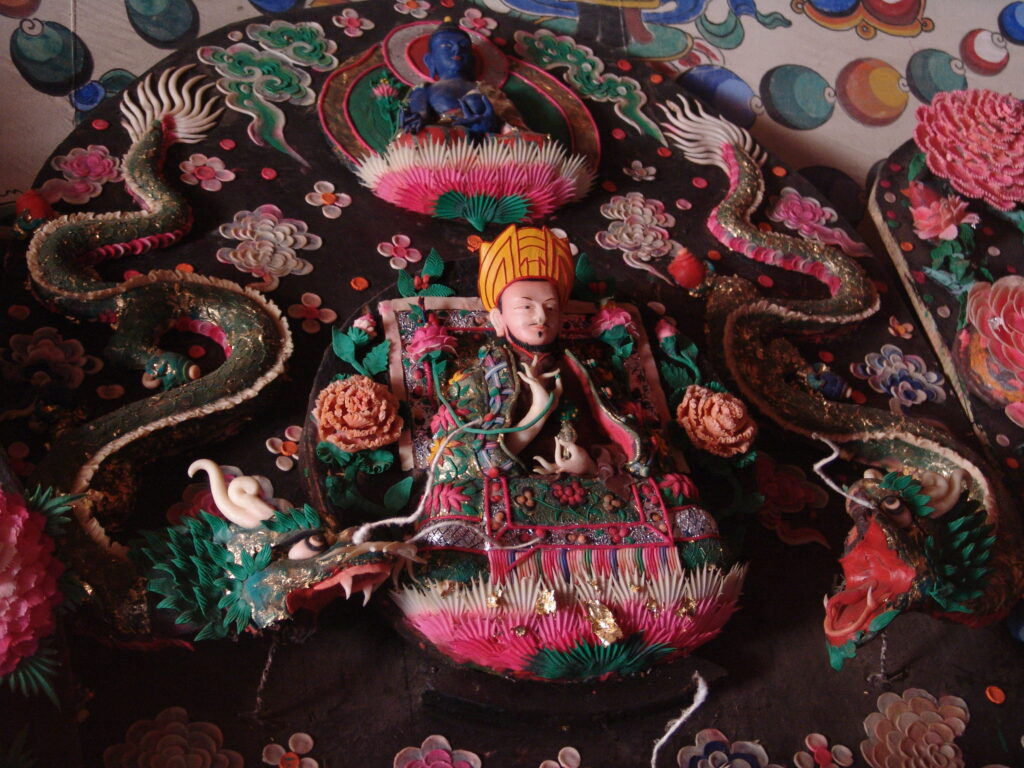
Tibetan devotees firmly believe that sincerely offering butter sculptures to the Buddhas, Bodhisattvas, and Dharma protectors can dispel disasters, bring peace, great fortune, and swiftly lead to the attainment of Anuttara-samyak-sambodhi (the supreme enlightenment).
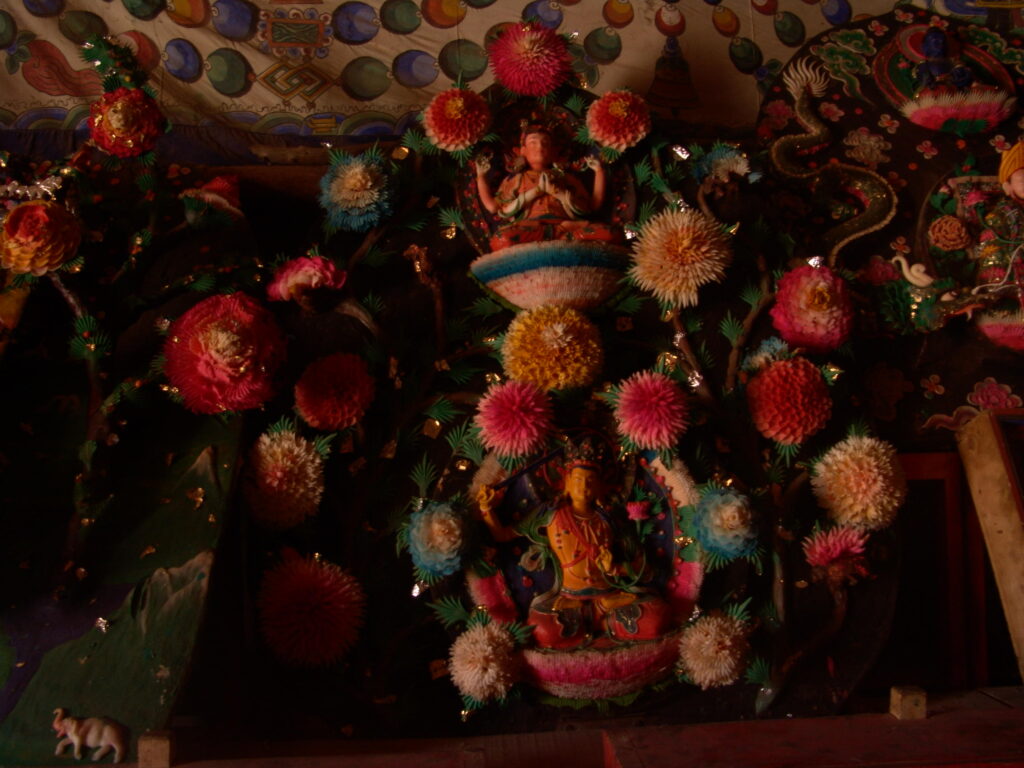
During a recent visit to Kumbum Monastery, I was deeply captivated by these butter sculptures, which fully embody the Tibetan Buddhist artistic qualities of refinement, intricacy, and ingenuity, resembling “three-dimensional comic strips.” While many Tibetan Buddhist artworks often evoke awe and a sense of religious solemnity, the butter sculptures at Kumbum Monastery exude tranquility and elegance. The serene expressions of the deities seem particularly well-suited to be depicted in butter—truly a texture “as smooth as congealed fat.” Here, aesthetics transcend theology, transforming Tibetan Buddhist narratives into something as beautiful as flowers, as pure as cream, and as fragrant as butter itself.
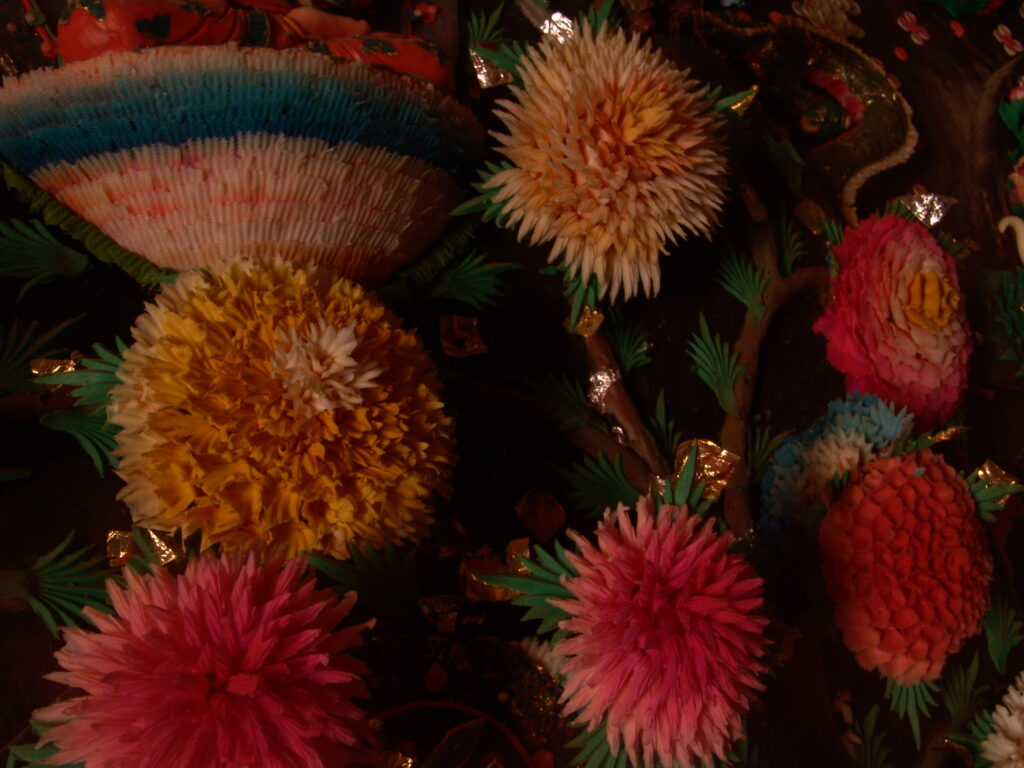
Butter, a creamy dairy product made by Tibetan herders on the Qinghai-Tibet Plateau, is derived from churning milk repeatedly to extract its yellowish-white fat. This fat solidifies into a soft, fine, and highly malleable substance, ideal for sculpting. According to legend, the tradition of butter sculptures dates back to 641 CE, during the Tang dynasty’s matrimonial alliance with the Tibetan Empire. Princess Wencheng brought with her to Tibet a life-sized statue of the 12-year-old Shakyamuni Buddha, enshrining it at the Jokhang Temple. Following Indian Buddhist customs, offerings to Buddhas and Bodhisattvas traditionally include six items: flowers, incense, holy water, scented paste, fruits, and butter lamps. However, given Tibet’s cold climate and barren landscape where fresh flowers were scarce, people began crafting butter flowers as offerings, thus establishing this unique artistic tradition.
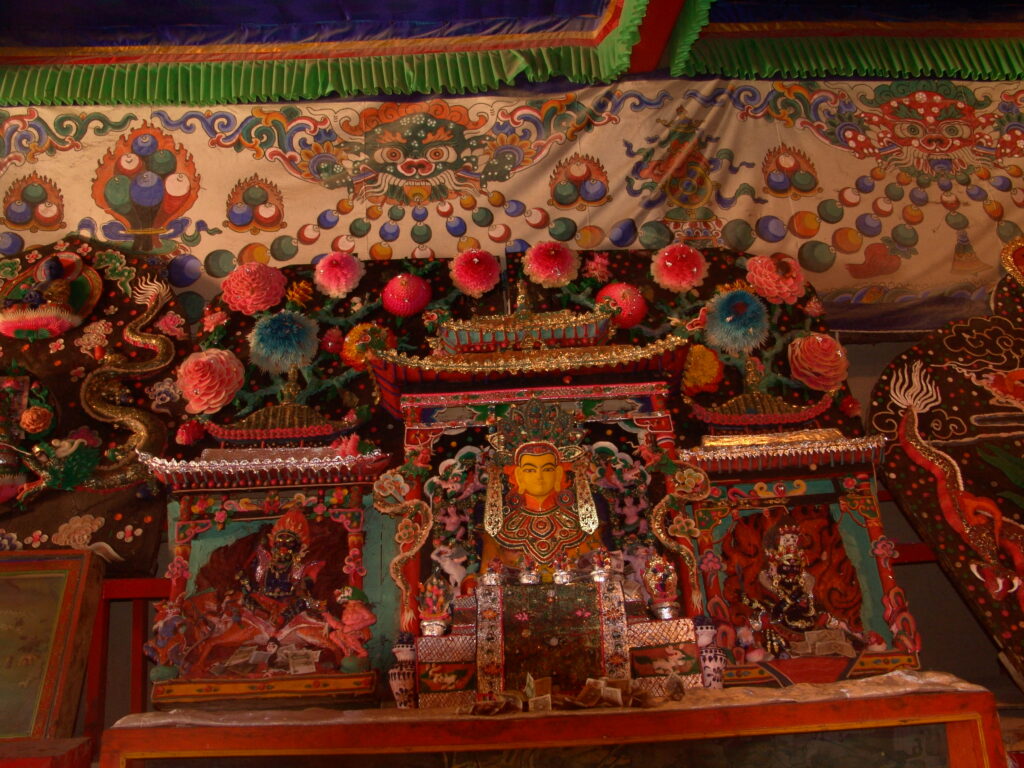
A tour guide at Kumbum Monastery shared with me that Tibetan Buddhist followers believe the creation of butter sculptures is closely tied to Je Tsongkhapa, the founder of the Gelug school of Tibetan Buddhism and teacher to both the Dalai and Panchen Lamas. The flourishing of butter sculptures is said to be inspired by a dream Tsongkhapa once had. Born in the very area where Kumbum Monastery now stands, Tsongkhapa dreamed of thorn bushes transforming into radiant lamps, wild grasses blooming into vibrant flowers, and countless pearls shimmering brilliantly amidst these lamps and flowers. Upon awakening, he organized monks to recreate his dream using butter sculptures, offering them before the Buddha on the night of the 15th day of the lunar month. Prior to the 1950s, these sculptures were traditionally burned before dawn after their display, symbolizing the ephemeral nature of their beauty—like a fleeting blossom.
The introduction text comes from Wiki
Photo By Clint & Wilson