
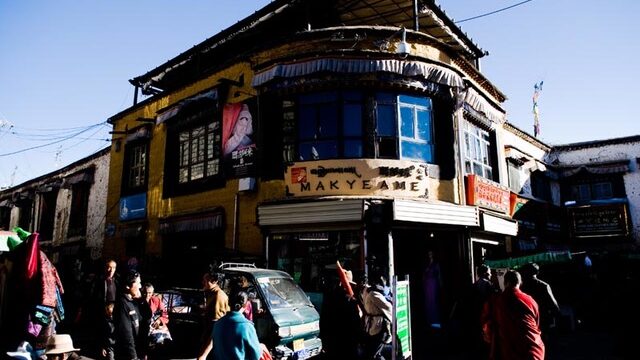
Barkhor (Wylie: bar-skor, ZYPY: བར་སྐོར་), is the commercial center and busiest street of the old city of Lhasa, Tibet. The Barkhor Ring Road is composed of Barkhor East Street, Barkhor South Street, Barkhor West Street and Barkhor North Street. The circumference of Barkhor Street is about 1,000 meters, originated in the 7th century A.D., better preserving the original style of the old city of Lhasa.
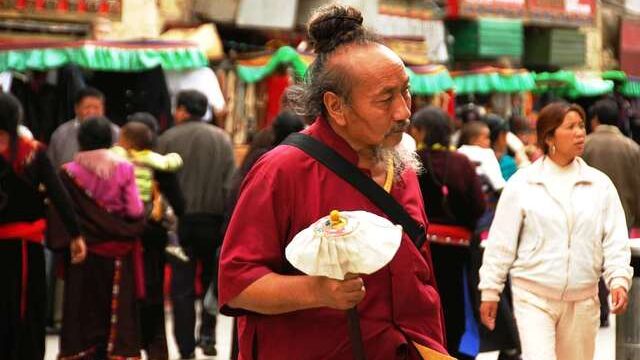
Barkhor is the oldest street in Lhasa, the ancient Songtsen Gampo and Princess Wencheng led the migration to Lhasa, first built the Jokhang, where Tibetan Buddhism believers began to turn around the monastery, and gradually formed a road, became one of the three turnstiles of Lhasa in the turnstiles (the other two are Lingkhor and Woesor), the Tibetans call the Barkhor “holy road”.
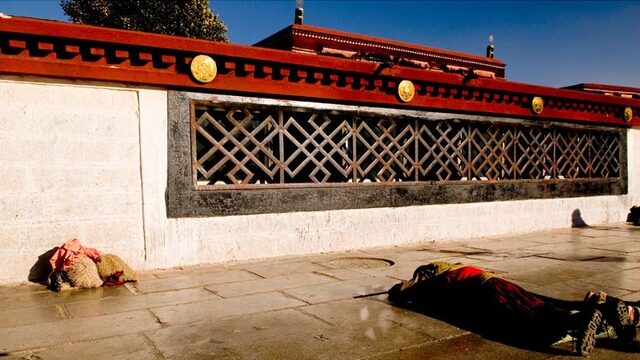
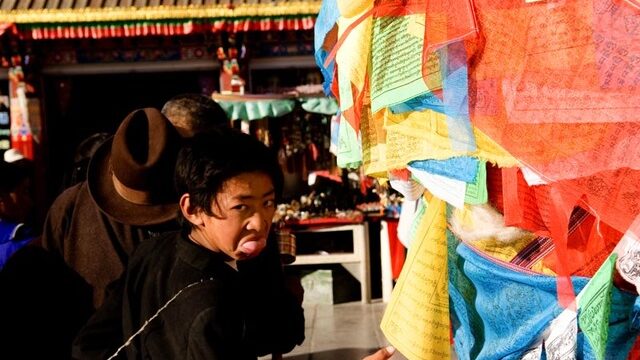
The Barkhor is a popular devotional circumambulation around the historic Jokhang for pilgrims and locals. The walk is about a kilometre long and encircles the entire Jokhang Temple complex, the former seat of the Nechung Oracle in Lhasa called the Muru Nyingba Monastery, and a number of former nobles’ houses including Tromzikhang and Jamkhang. There are four large incense burners (sangkangs) in the four cardinal directions, with incense burning constantly, to please the gods protecting the Jokhang. The Tromzikhang market is busy in the Barkhor, and the area is a major tourist attraction.
Because the Jokhang Temple has also become a symbolic centre of Tibetan protests since 1987, the Barkhor has also seen many demonstrations. When the 14th Dalai Lama won the Nobel Peace Prize in 1989, many of his supporters threw tsampa around the Barkhor to celebrate. After the central government denounced the prize, residents who continued such demonstrations were arrested. The square was briefly closed by riot police during the 2008 Lhasa protests.
The introduction text comes from Wiki
Photo By Clint & Wilson