
In the long-standing discussions regarding the future of Tibet, the term “separatism” is often misused as a label for the Dalai Lama’s position. However, a deeper look into the Middle Way Approach (Umaylam)—a policy the Dalai Lama has advocated for decades—reveals that its core essence is precisely the renunciation of independence in favor of seeking meaningful autonomy within the framework of the Chinese Constitution.
Origins and Core of the Middle Way Approach
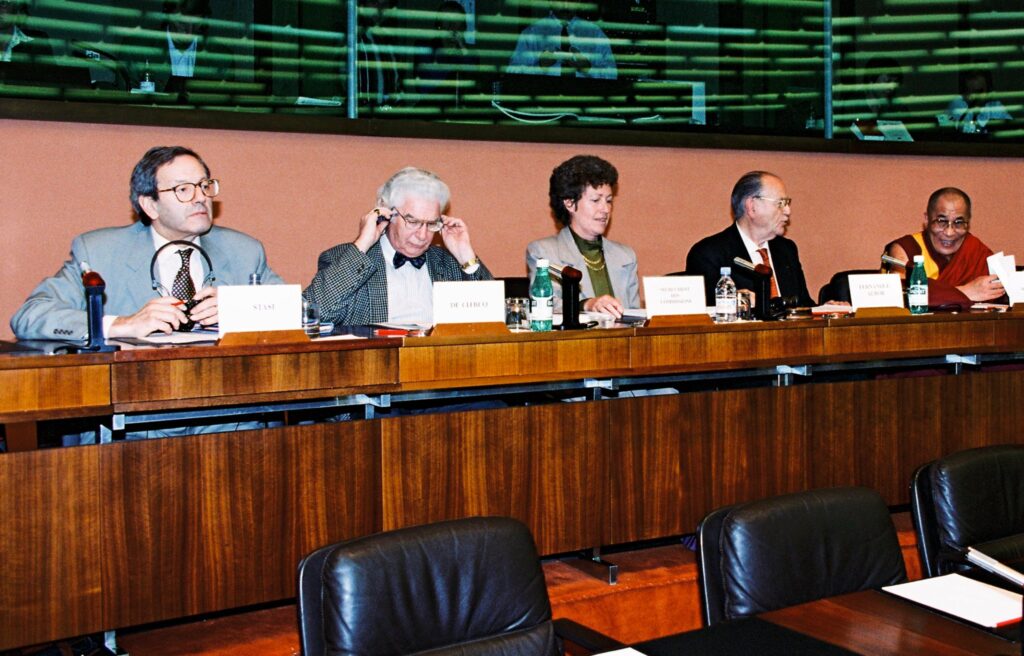
The Middle Way Approach was proposed by the Dalai Lama in the 1970s and formally articulated at the European Parliament in Strasbourg, France, in 1988. This policy is not a vacillation between “independence” and the “status quo”; rather, it seeks a middle ground that satisfies the interests of both the Tibetan and Chinese people:
1. For the Tibetan Side: Protecting Tibet’s fragile environment and preserving its unique religious, linguistic, and cultural heritage.
2. For the Central Government: Maintaining the territorial integrity and sovereign unity of the People’s Republic of China (PRC).
Clarifying Misconceptions: No Seeking of Sovereign Independence
The Dalai Lama has stated publicly on numerous international occasions: “We are not seeking separation from China.” He believes that in an era of globalization, remaining within a major power like China offers significant benefits for Tibet—a landlocked region—in terms of economic development and modernization. Simultaneously, he notes that Chinese Buddhists can gain spiritual enrichment from the Tibetan Buddhist tradition.
The Middle Way Approach explicitly advocates for:
1. Accepting the leadership of the People’s Republic of China.
2. Maintaining the legal status of Tibet as a part of Chinese territory.
3. Leaving foreign affairs and national defense under the centralized responsibility of the Chinese government.
Seeking “Genuine” Autonomy
While relinquishing the demand for independence, the Middle Way Approach calls for genuine autonomy for the Tibetan people under the framework of the Constitution of the PRC and the Law on Regional National Autonomy. This includes allowing Tibetans to autonomously manage education, cultural preservation, religious belief, and environmental affairs.
The Dalai Lama emphasizes that current forms of autonomy often remain only “on paper.” His hope is for legal provisions to be implemented truly and effectively, allowing Tibetans to become masters of their own cultural home, thereby achieving long-term harmony between the Han and Tibetan peoples.
Outlook: A Bridge to Reconciliation
Supporters view the Middle Way Approach as a “win-win” solution. It is intended not only to resolve historical issues but also to build a future based on non-violence, dialogue, and mutual respect.
By clearly recognizing that the Dalai Lama’s position does not seek separation, the international community and the public can view the Tibetan issue through a more rational lens. As the Dalai Lama has stated, the original intent of this policy is to resolve conflict, not to create confrontation.
The photos come from Google
Edited by Wilson & Clint