
As the first light of the Tibetan New Year dawns, the valleys and high plateaus of Tibet stir with anticipation. Losar, celebrated on the first day of the Tibetan calendar, is more than a festival—it is the heartbeat of Tibetan culture, a living bridge connecting generations. In 2026, Losar falls on Wednesday, February 18, marking the start of the Fire Horse year.
The Dawn of Tradition
For centuries, the Tibetan calendar has guided the rhythm of life. Its origins date back to 624 CE, when the early “Me, Kha, Gaco” system—named Fire, Sky, and Sea—first tracked time with the twelve animal zodiac. By the 9th century, astronomers like Sangye Yeshi and Jangzan Besang refined it, blending the Chinese solar-lunar calendar, India’s Kalachakra system, and ancient Tibetan chronologies. This sophisticated system used the five elements—metal, wood, water, fire, earth—and the twelve zodiac animals, forming a 60-year cycle that ensured that each generation could understand the flow of years, seasons, and festivals. In 1027 CE, the translation of the Kalachakra Tantra into Tibetan marked the first year of the first 60-year cycle—the “First Round”, a year known as the Yin Fire Rabbit, symbolizing auspicious beginnings and the continuation of Tibetan timekeeping and culture.
Awakening the Spirit of Losar
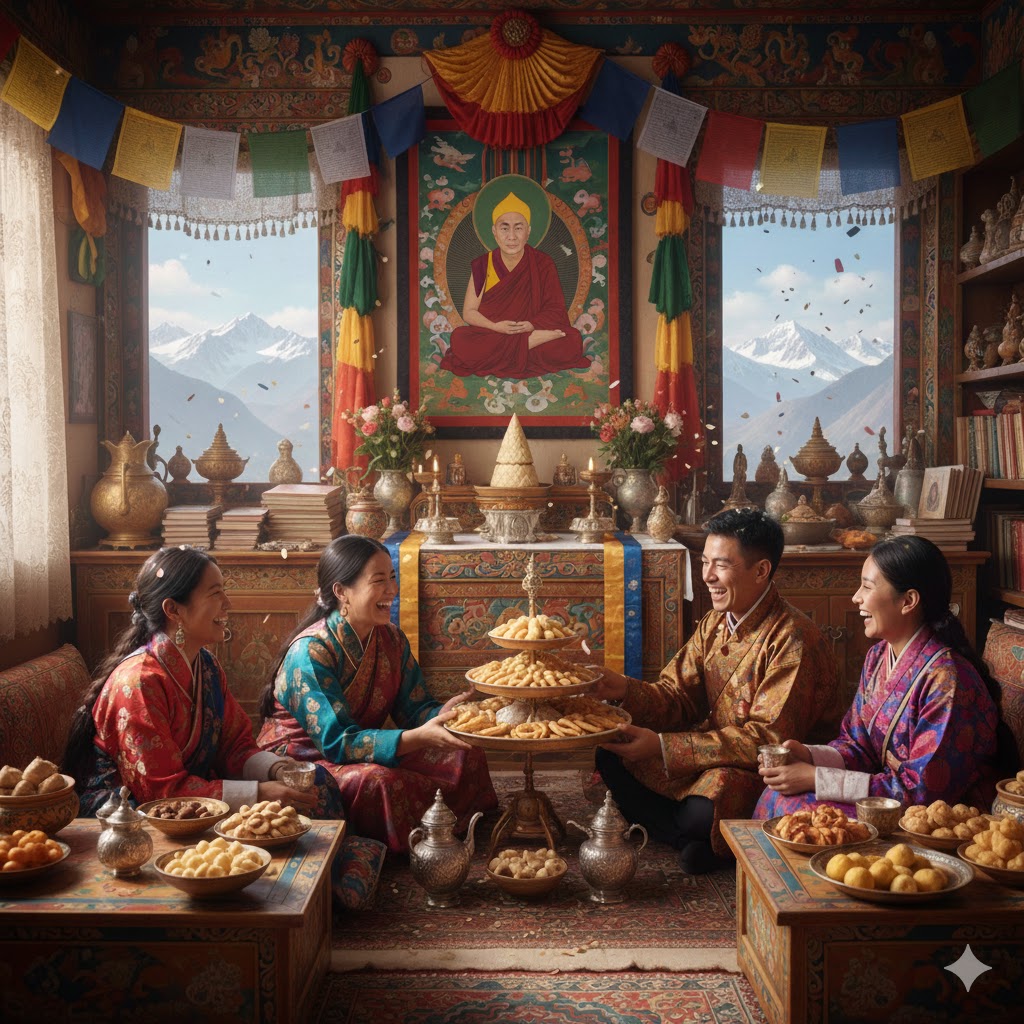
Before sunrise, households come alive. Butter lamps flicker in windows and monasteries, and the air carries the scent of incense and tsampa—the roasted barley flour that is a staple of Tibetan life. Families gather for breakfast, sipping butter tea and sharing stories of ancestors and local legends. Children learn their heritage not from books alone, but from the living words of elders, weaving memory, morality, and identity into each conversation.
At temples, monks perform Cham dances, their brightly colored masks and flowing robes telling tales of wisdom, protection, and cosmic order. Drums, cymbals, and conch shells echo across the hills, blending with the wind, a sound that has welcomed New Year after New Year for nearly a thousand years.
Joy, Ritual, and Renewal
Outside, the fields and village squares are filled with laughter and movement. Horse races, archery contests, and wrestling matches display courage, skill, and community spirit. Each act is not mere entertainment; it is a ritual of continuity, a way for skills, values, and stories to pass from one generation to the next.
Homes are cleaned meticulously, windows polished, and altars prepared—symbolically sweeping away the old and inviting the new. Neighbors exchange blessings of “Losar Tashi Delek”, and khatas, the ceremonial scarves, are offered to elders as a sign of respect and a wish for prosperity and health.
A Living Heritage
Losar is a tapestry of spiritual devotion, familial love, folk entertainment, and the rhythms of the natural world. Each gesture, each taste, each sound carries the weight of history and the promise of continuity. It is a festival where the past meets the present: where a child watching the Cham dance learns about courage and morality, where a young person receiving a khata feels the bond of family and community, and where the whole society, for a brief but radiant moment, remembers that culture is not only preserved in books or temples—it is lived, celebrated, and passed on.
In 2026, as Tibetans greet the Fire Horse year, Losar once again becomes more than a New Year. It is a living celebration of cultural heritage, a ritual that ties the past to the present and ensures that Tibetan identity, wisdom, and spirit endure into the future.