
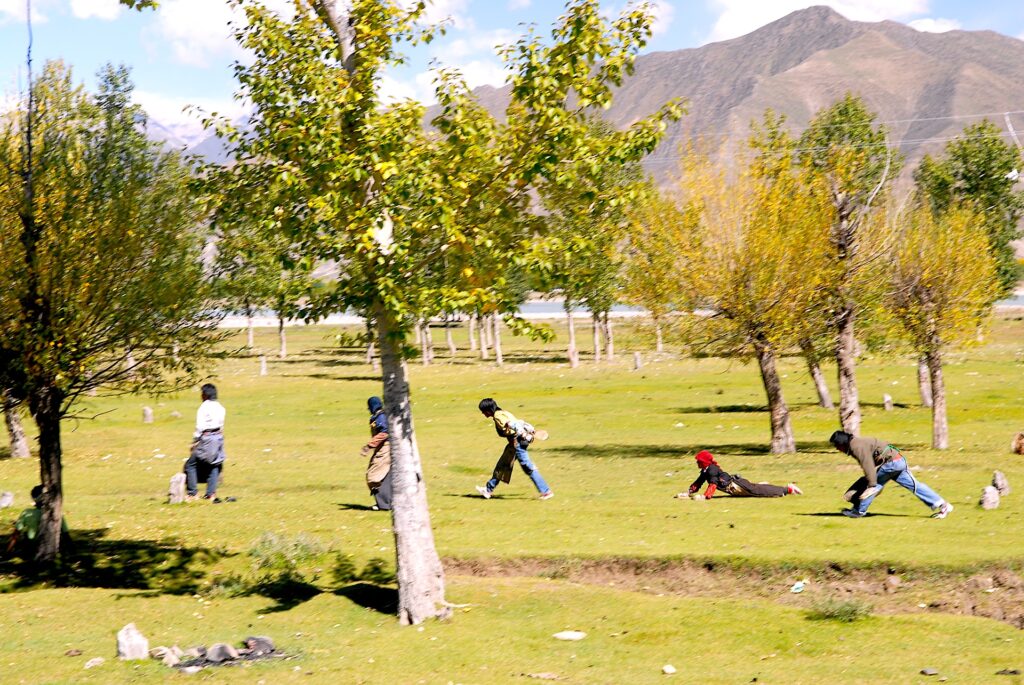
Kowtowing with the full body (Tibetan: ཕྱག་འཚལ, meaning “prostration”) is a form of advancement in the pilgrimage of Tibetan Buddhism.
“Kowtowing with the full body” is divided into three types: long-distance (traveling thousands of miles over months or years, enduring wind and weather, eating and sleeping outdoors, crawling over sand, rocks, ice, and snow, persistently heading toward the destination), short-distance (lasting a few hours, ten days, or half a month), and on-the-spot.
Kowtowing with the full body is also a preparatory ritual (preliminary practice) for Tibetan Buddhists beginning to study Tantric Buddhism before formal修行.
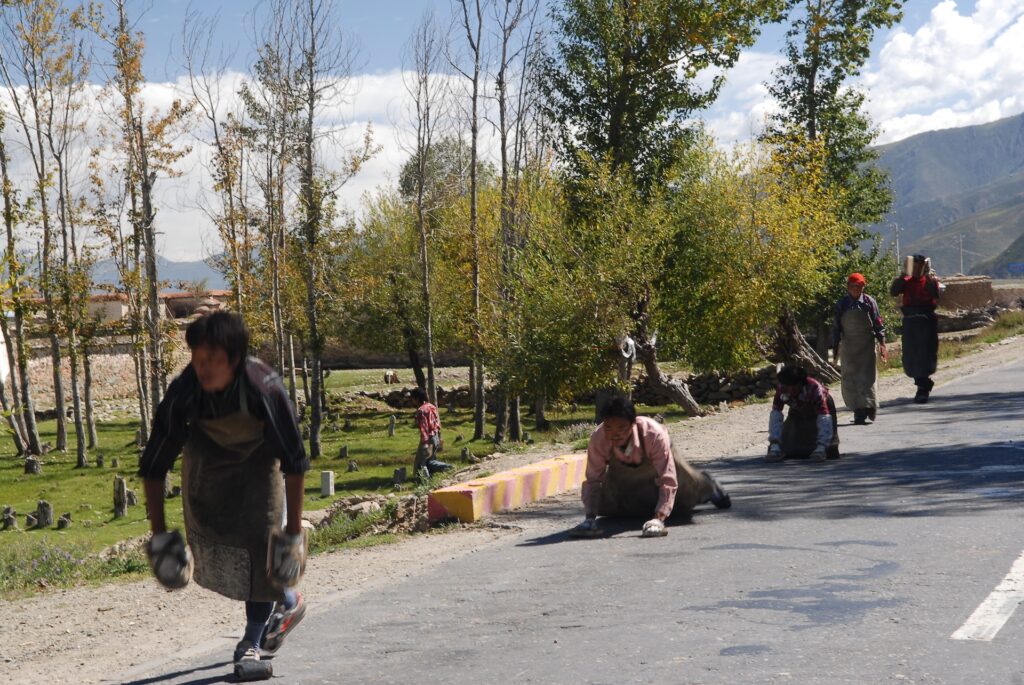
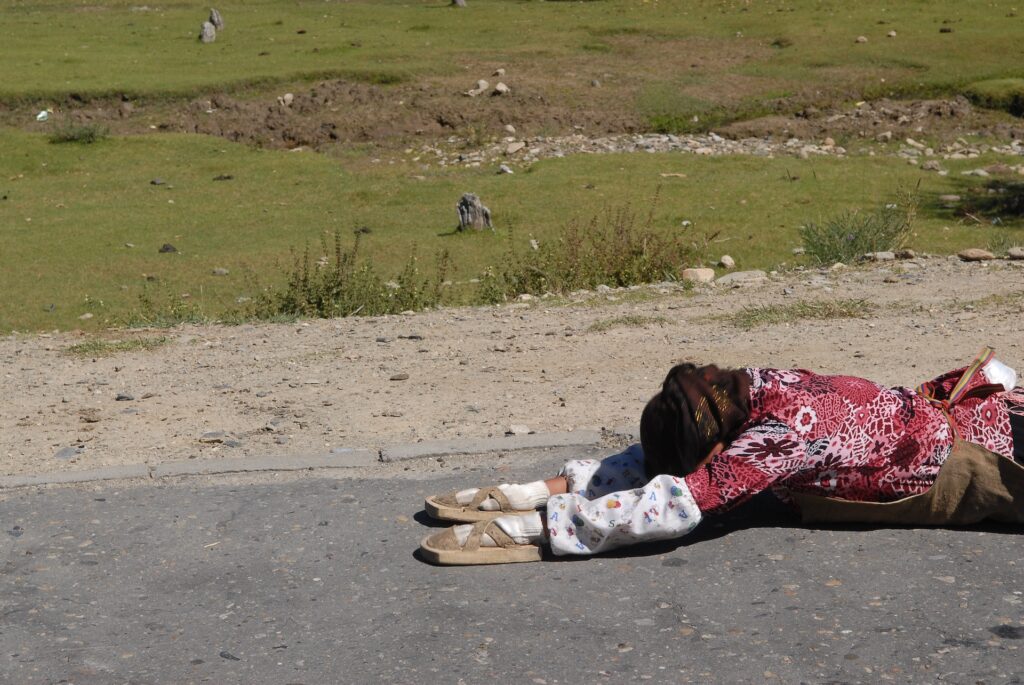
“Kowtowing with the full body” refers to prostrating with the entire body, lying flat on the ground with both hands extended forward. Each time the body lowers, a mark is made on the ground with the hands; after standing up, the pilgrim advances to the marked spot and prostrates again, repeating this cycle continuously. When encountering a river, one must wade through or take a boat, but first prostrate on the shore for a distance equal to the river’s width before crossing. After resting at night, the journey resumes from the point where the prostrations stopped. With utmost devotion, no distance of a thousand miles feels too far, and even solid rock is worn through, leaving people in awe.
On the roads leading to Lhasa from various regions, people frequently see devotees starting from their distant hometowns, wearing hand guards and knee pads, with a fur garment
Kowtowing with the full body is not only related to Tibetan Buddhism but also has intricate connections with the kneeling and bowing rituals of the Han Chinese.
The kneeling and bowing ritual is one of the longest-used and most elaborate basic etiquette practices in Chinese feudal society.
The Rites of Zhou: Spring Official: Grand Supplicant records nine types of bowing rituals: “The first is called ‘ji shou’ (touching the head to the ground), the second ‘dun shou’ (knocking the head), the third ‘kong shou’ (empty head)…” This indicates that as early as the Zhou Dynasty, this ritual had matured and was widely promoted.
“When the waist and thighs bend into a precarious position, it is kneeling; from kneeling, it becomes even more respectful when the head touches the ground, which is bowing.”
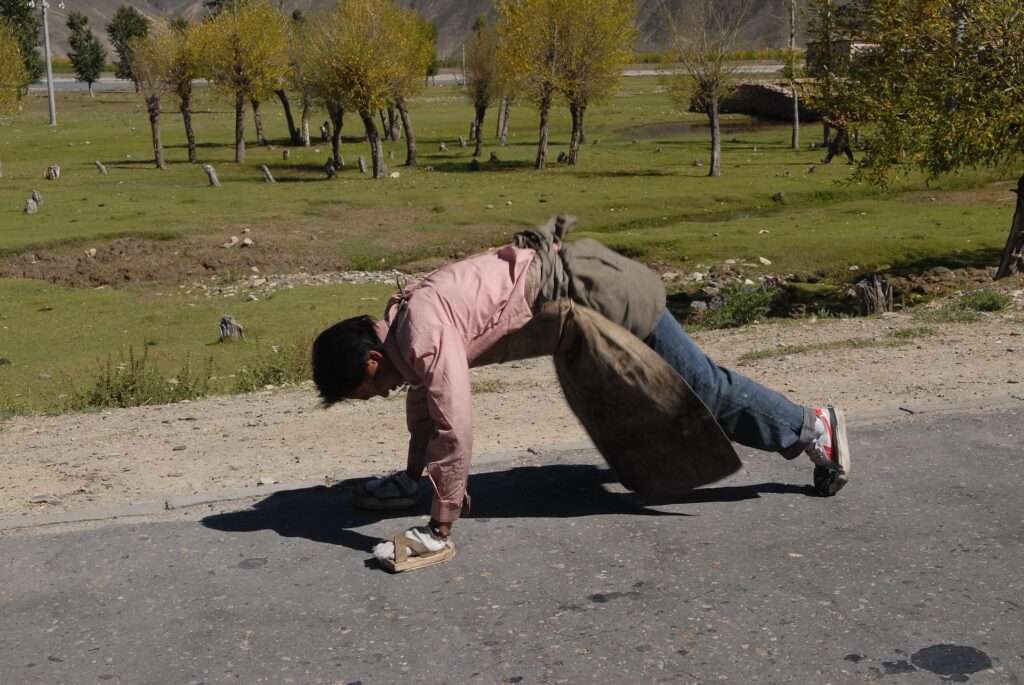
From a literal perspective, kneeling refers to a precarious posture of the legs; for the person being honored, the one performing the ritual places themselves in a physically vulnerable state, first demonstrating through their posture that they pose no threat and require no defense from the honored individual.
Bowing, when viewed from its meaning, indicates that the person performing the ritual shows humility and submission to the one being honored, willingly yielding and accepting subjugation, with the head lowered, eyes cast down, and hands drooping to the ground—a clear gesture of subservience to a ruler.
It was not until after the 1911 Xinhai Revolution that Dr. Sun Yat-sen declared the abolition of such rituals of obeisance between ruler and subject.
During the Tang Dynasty, interactions with Tubo (Tibet) accelerated large-scale mutual learning between these two outstanding ethnic groups.
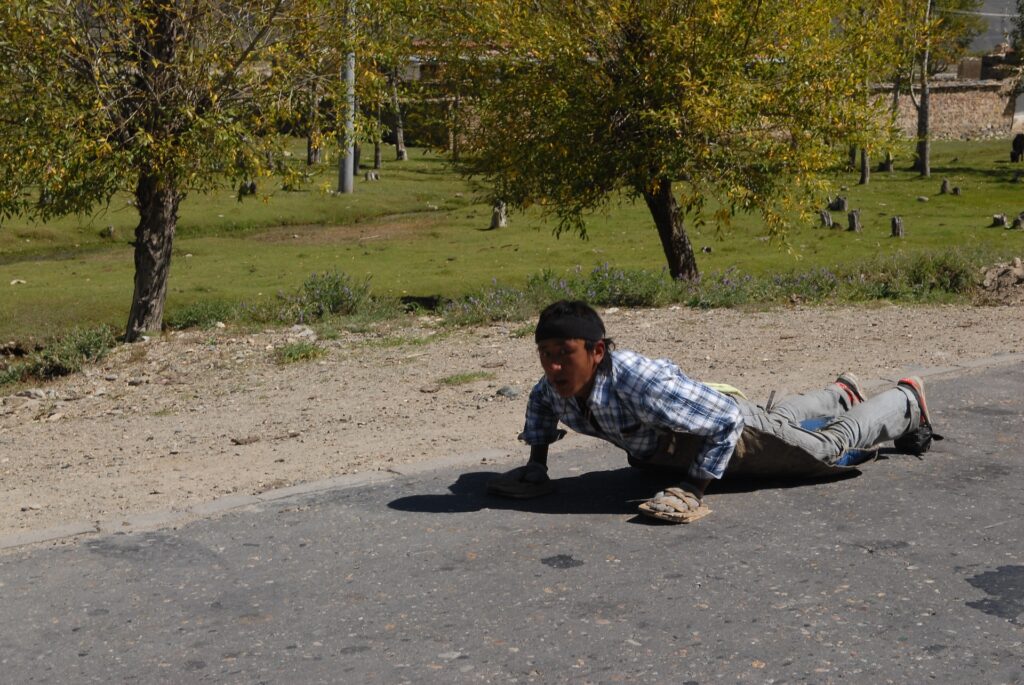
Kowtowing with the full body is likely a continuation of “ji shou,” the most extreme form of submission, and under the influence of Buddhism, devotees, to demonstrate the sincerity of their faith, made the kneeling and bowing ritual even more elaborate, adding full-body prostration to further express their submission.
Gradually, this ritual was not only promoted within the religious sphere but also widely accepted and adopted across various social classes.
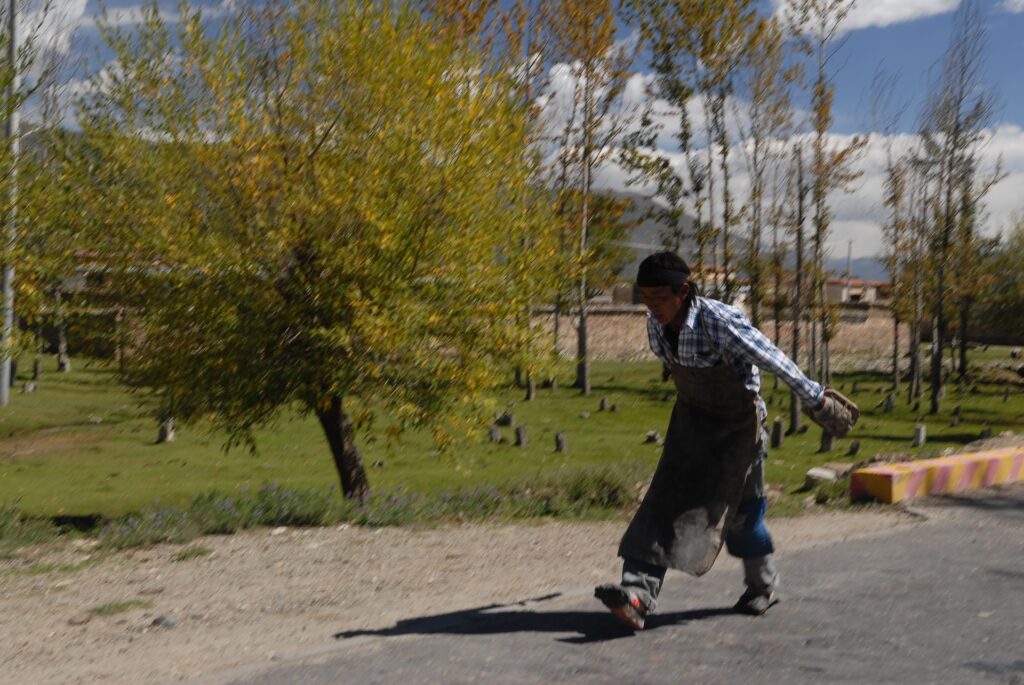
When kowtowing with the full body, the hands are clasped together, signifying an understanding of the Buddha’s will and teachings; touching the forehead, mouth, and chest symbolizes the integration of body, speech, and mind with the Buddha, becoming one.Devotees believe that in a lifetime of practice, one must perform at least 100,000 full-body kowtows, barefoot, to be considered truly devout.
There is an even more arduous method of prostration. Some devotees face the monastery, and with each kowtow, they move forward a distance equal to the width of their body.

Circling a monastery with a perimeter of one kilometer in this manner requires approximately 2,000 kowtows. The palms and knees of those performing the prostrations often bleed from the abrasion. Kowtowing with the full body is the most devout form of prayer practiced by Tibetan Buddhist devotees to fulfill their faith, seek blessings, and avert disasters. At the same time, it is also a method of practice in the Tantric tradition of Tibetan Buddhism. In Tibetan Buddhist Tantra, practitioners cultivate the “Three Secrets Empowerment,” aiming to purify the “three actions” of body, speech, and mind, aligning them with the Buddha’s three secrets of body, speech, and mind, ultimately achieving Buddhahood in this body, with practice being the only path.
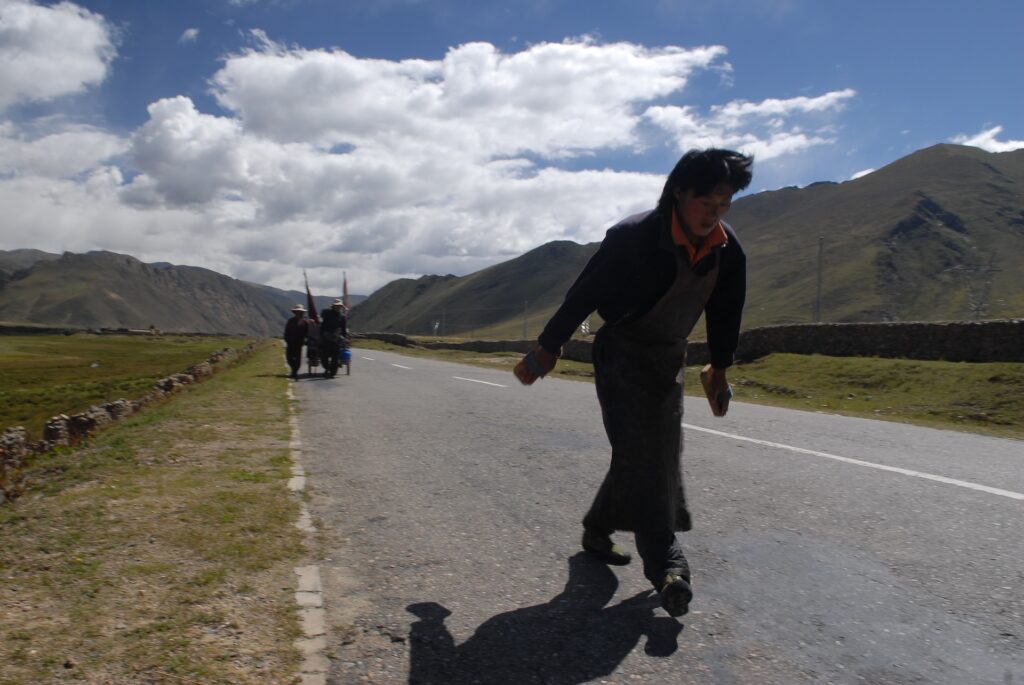
Practice serves as the precursor to the esoteric initiation for Tantric practitioners, regarded as the foundation of Tantra, with the purpose of clearing the mind and suppressing desires to reach a state of selflessness. The practice is extremely arduous, requiring uninterrupted effort from morning to night, typically taking more than two years to complete, including the indispensable 100,000 full-body kowtows.
“Kowtowing with the full body” involves two types of people: ordinary religious believers in Tibetan areas, mainly herders, while many Tibetans living in cities have little passion left to undertake “such a troublesome” task; and temple dwellers (lamas), true lamas—not the pretenders seen by tourists in Tibet, draped in monastic robes, chanting incomprehensible scriptures while extending a hand to beg for alms.
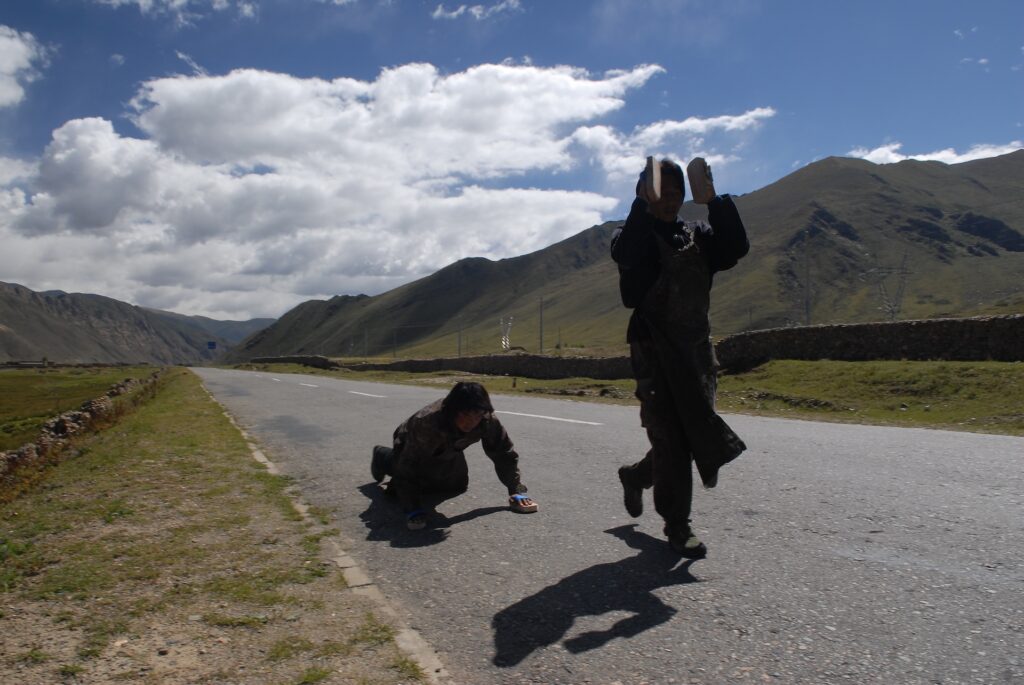
The teams of people performing “kowtowing with the full body” seen on television are mostly the former; they spare no effort, often selling all their household possessions before embarking on a pilgrimage to the Potala Palace, pushing only a flat cart loaded with simple daily necessities (tent, clothing, bedding, utensils…). The common age in these groups is around forty, typically the head of the household, bringing along the entire family—adults and children together.
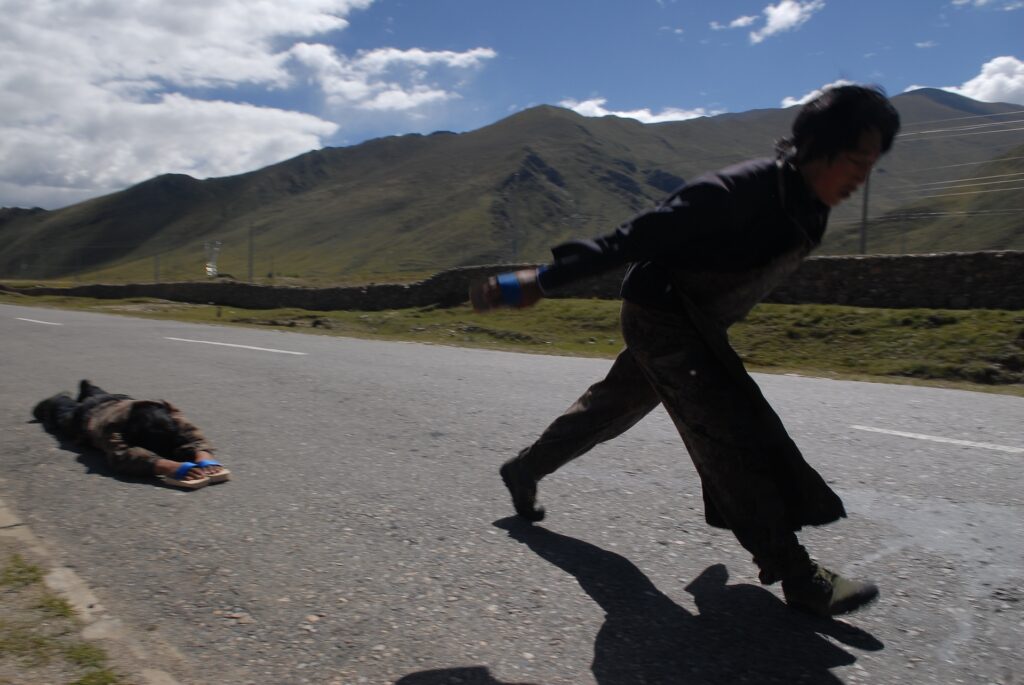
Many Tibetan herders regard making a pilgrimage to the Jokhang Temple once in their lifetime as their ultimate wish; they toil hard to accumulate wealth, but when the time for pilgrimage arrives, they willingly give up all their possessions, a practice many disapprove of, considering it utterly foolish. Yet this practice brings them a sense of inner peace, something we, with our relentless struggles, deceitful business dealings, and daily lives in the mainland, can neither attain nor comprehend.
On the pilgrimage journey, when you look at their expressions, there is no trace of pain or particular joy—only serenity, a serenity as pure as the Tibetan sky, untainted by any dust.
All their joy and passion are fully released in front of the Potala Palace and the Jokhang Temple.
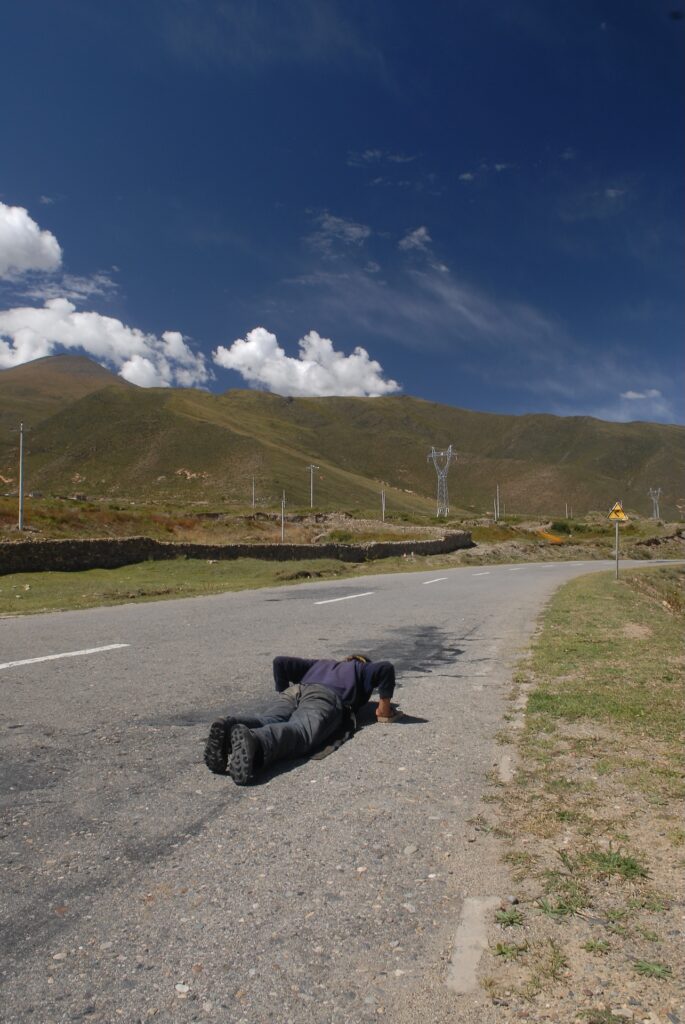
The introduction text comes from Wiki&Baidu
Photo By Clint & Wilson