
“Everest”, “Sagarmatha”, and “Qomolangma” redirect here. For other uses, see Everest (disambiguation), Sagarmatha (disambiguation), and Qomolangma (disambiguation).
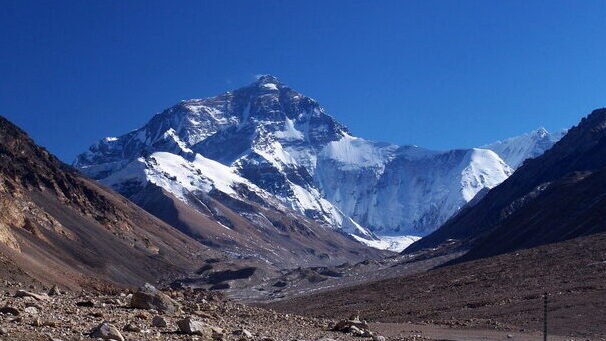
The area surrounding Mount Everest, located in the Himalayas on the border between Nepal and Tibet, is home to several towering peaks that exceed 8,000 meters in elevation. These peaks are part of the Eight-Thousanders, the 14 highest mountains in the world, all of which surpass 8,000 meters.

Mount Everest, known locally as Sagarmatha or Qomolangma,[note 4] is Earth’s highest mountain above sea level, located in the Mahalangur Himal sub-range of the Himalayas. The China–Nepal border runs across its summit point.Its elevation (snow height) of 8,848.86 m (29,031 ft 8+1⁄2 in) was most recently established in 2020 by the Chinese and Nepali authorities.
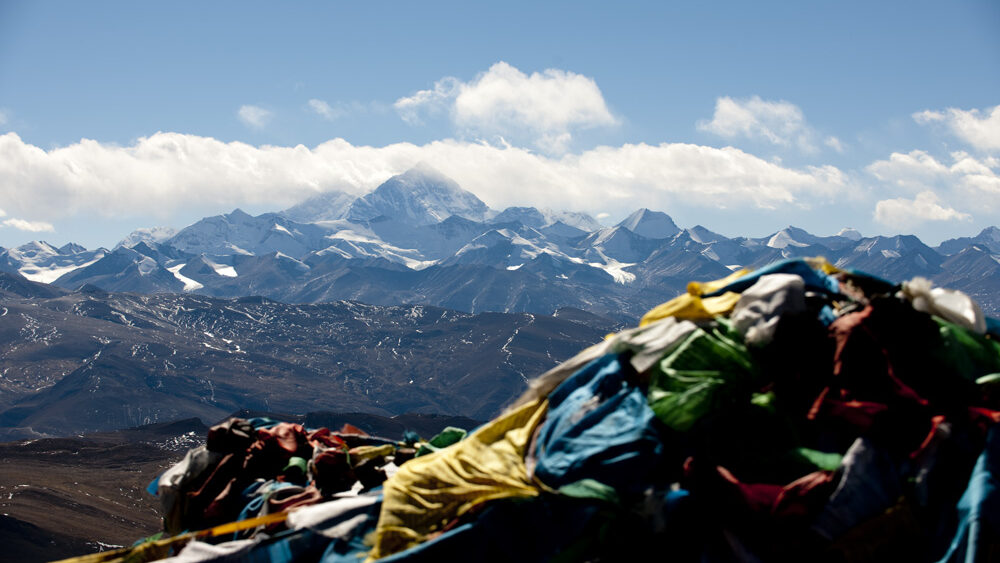
Mount Everest attracts many climbers, including highly experienced mountaineers. There are two main climbing routes, one approaching the summit from the southeast in Nepal (known as the “standard route”) and the other from the north in Tibet. While not posing substantial technical climbing challenges on the standard route, Everest presents dangers such as altitude sickness, weather, and wind, as well as hazards from avalanches and the Khumbu Icefall. As of May 2024, 340 people have died on Everest. Over 200 bodies remain on the mountain and have not been removed due to the dangerous conditions.

Mount Everest attracts many climbers, including highly experienced mountaineers. There are two main climbing routes, one approaching the summit from the southeast in Nepal (known as the “standard route”) and the other from the north in Tibet. While not posing substantial technical climbing challenges on the standard route, Everest presents dangers such as altitude sickness, weather, and wind, as well as hazards from avalanches and the Khumbu Icefall. As of May 2024, 340 people have died on Everest. Over 200 bodies remain on the mountain and have not been removed due to the dangerous conditions.
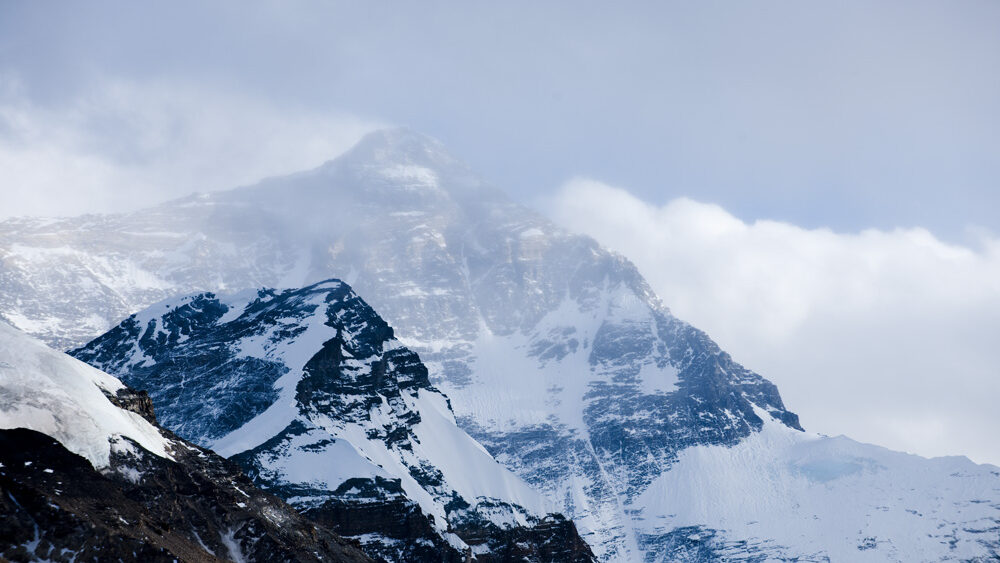
The Tibetan name for Everest is Qomolangma (ཇོ་མོ་གླང་མ, lit. “holy mother”). The name was first recorded (in a Chinese transcription) in the 1721 Kangxi Atlas, issued during the reign of Qing Emperor Kangxi; it first appeared in the West in 1733 as Tchoumour Lancma, on a map prepared by the French geographer D’Anville and based on Kangxi Atlas.The Tibetan name is also popularly romanised as Chomolungma and (in Wylie) as Jo-mo-glang-ma.
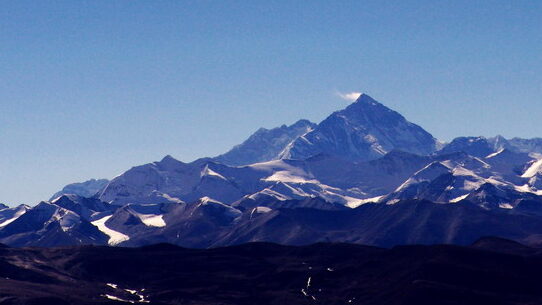
The official Chinese transcription is 珠穆朗瑪峰, or Zhūmùlǎngmǎ Fēng in pinyin. While other Chinese names have been used historically, including Shèngmǔ Fēng (聖母峰, lit. “holy mother peak”), these names were largely phased out after the Chinese Ministry of Internal Affairs issued a decree to adopt a sole name in May 1952.
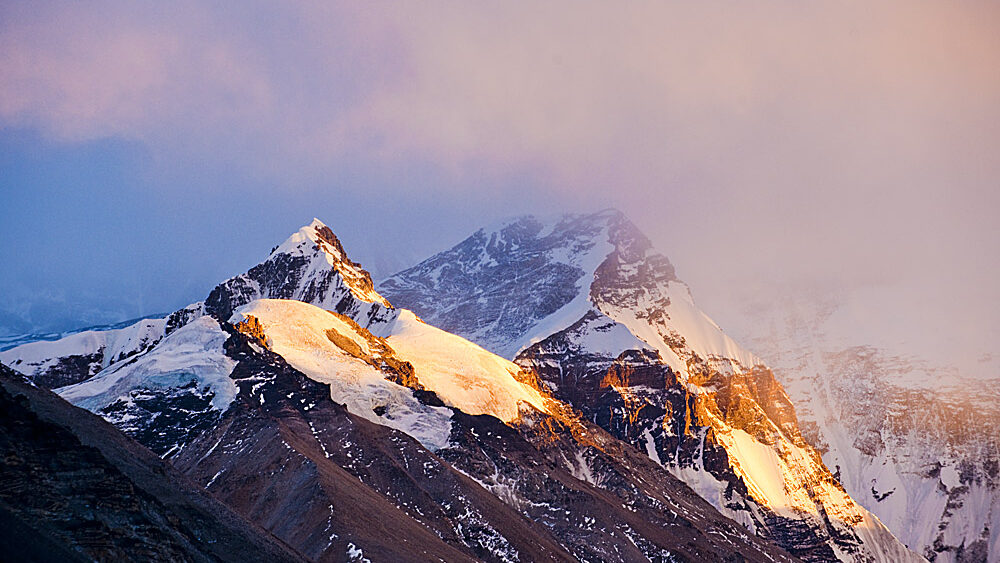
The introduction text comes from Wiki
Photo By Clint & Wilson